
How to Get Rid of Dust Mites in Curtains Without Washing
Learn how to get rid of dust mites in curtains without washing. Use steam, HEPA vacuums, freezing, and sprays to eliminate allergens from heavy drapes.
To get rid of dust mites in curtains without washing, use high-temperature steam cleaning at 140°F (60°C) or higher, thorough HEPA vacuuming, or localized freezing. Dust mites die when exposed to sustained temperatures above 130°F (54.4°C) or below 0°F (-18°C). These dry-treatment methods neutralize live mites and break down their allergenic fecal pellets without causing water damage, color fading, or fabric shrinkage on dry-clean-only or heavy drapery.
Why Dust Mites Infest Curtains
Dust mites (Dermatophagoides pteronyssinus and Dermatophagoides farinae) thrive in fibrous materials that accumulate human and pet dander. Because curtains hang vertically near drafty windows and heating vents, they act as passive air filters, trapping airborne skin flakes, dust, and moisture.
When ambient indoor humidity rises above 50%, window frames often develop micro-condensation. This creates a prime breeding ground for dust mites. While laundering in water over 130°F is the standard eradication method, many decorative window treatments—such as velvet, silk, thermal-lined, or pinch-pleated drapes—cannot withstand a standard washing machine cycle. Alternative eradication protocols are required to sanitize these fabrics safely.
5 Proven Methods to Eliminate Dust Mites Without Washing
1. High-Heat Garment or Upholstery Steaming
Thermal eradication is the most reliable way to kill dust mites on hanging curtains. Steam penetrates deep into woven fibers, reaching lethal temperatures instantaneously.
- Target Temperature: Ensure your handheld garment steamer or commercial steam cleaner outputs steam between 140°F and 212°F (60°C to 100°C).
- Application Technique: Hold the steam nozzle 0.5 to 1 inch away from the fabric. Move slowly from top to bottom at a rate of roughly 1 foot every 3 to 5 seconds.
- Moisture Management: Avoid over-saturating the fabric. Keep the room ventilated with a ceiling fan or open window to ensure the curtains dry completely within 1 to 2 hours, preventing mold spores from developing.
2. Slow-Pass HEPA Vacuuming
While vacuuming does not always kill live mites clinging to fibers, it removes their food source (dead skin cells) and extracts dead mite bodies and waste pellets containing the Der p 1 allergen protein.
- Filtration Standard: Use a vacuum cleaner equipped with a sealed HEPA (High-Efficiency Particulate Air) filter capable of trapping 99.97% of particles down to 0.3 microns. Non-HEPA vacuums will simply exhaust dust mite particles back into your room's air.
- Attachment: Use a dedicated upholstery brush or a drapery nozzle with soft bristles.
- Execution: Vacuum from the top of the curtain panel downward using overlapping vertical strokes. Pay special attention to pleats, hems, and header gathers where dust accumulates most heavily.
3. Sub-Zero Freezing Treatment
For delicate, unlined curtains (like sheer silk or lace) that cannot tolerate high heat or washing, extreme cold is completely lethal to dust mites.
- Temperature and Duration: Dust mites cannot survive temperatures of 0°F (-18°C) for longer than 24 hours.
- Process: Fold the curtain panels, place them inside a heavy-duty, airtight plastic storage bag, press out excess air, and seal tightly. Place the bag in a deep freezer for 24 to 48 hours.
- Post-Freeze Extraction: After removing and thawing the curtains outdoors, shake them out thoroughly and vacuum with a HEPA upholstery brush to remove the dead mites and allergens.
4. Plant-Based Anti-Allergen and Essential Oil Sprays
Certain natural compounds disrupt the cellular membranes of dust mites or denature their allergenic proteins without soaking the fabric.
- Eucalyptus & Tea Tree Formulation: Mix 2 cups of distilled water with 2 teaspoons of 100% pure eucalyptus oil or tea tree oil in a fine-mist spray bottle. Shake vigorously before each spray.
- Commercial Tannic Acid Sprays: Mineral- or plant-derived allergen-neutralizing sprays bind to the protein structures of mite waste, rendering them inert to human immune systems.
- Application: Lightly mist the curtain fabric from 12 inches away until barely damp to the touch. Test on a hidden hem first to ensure colorfastness.
5. Sunlight and UV-C Sanitation
Ultraviolet radiation breaks down both live dust mites and the microorganisms they feed upon.
- Natural Sunlight: On dry, sunny days with low humidity (below 40%), take curtains down and hang them outside on a clothesline in direct sunlight for 3 to 5 hours. Direct UV light paired with natural solar heat reduces mite populations significantly.
- Handheld UV-C Sanitizing Wands: Pass a calibrated UV-C sanitizing wand (emitting light at 253.7 nm) directly over the hanging fabric at a maximum distance of 1 inch, moving at 2 inches per second.
Comparing No-Wash Dust Mite Removal Methods
| Method | Eradication Rate | Best Fabric Compatibility | Time Required | Key Advantage |
|---|---|---|---|---|
| Steam Cleaning | Very High (Kills 99%+) | Velvet, synthetic blends, heavy cotton, linen | 15–30 mins per panel | Kills mites and removes wrinkles simultaneously |
| HEPA Vacuuming | Moderate (Removes allergens) | All fabric types (including delicate sheers) | 10 mins per panel | Zero moisture; removes allergen debris instantly |
| Freezing (0°F) | High (Kills 100% live mites) | Silk, lace, unlined panels, wool | 24–48 hours | Completely safe for heat-sensitive or fine fabrics |
| Allergen Sprays | Moderate to High | Colorfast drapes, synthetic weaves | 5–10 mins + drying time | Neutralizes allergenic proteins on contact |
| Direct Sunlight / UV | Moderate | Heavy linens, canvas, light-colored cotton | 3–5 hours | Chemical-free, zero energy cost |
The Ultimate 3-Step No-Wash Routine for Heavy Drapes
For the best results without removing heavy window treatments from their rods, perform this combined protocol every 4 to 6 weeks:
- Step 1: Deep Vacuum. Go over the front and back of the hanging drapes using a HEPA vacuum with an upholstery tool. This removes loose surface debris so you do not push dust deeper into the fabric during steaming.
- Step 2: Steam Sanitize. Run a garment steamer over the drapes, working slowly from the top pleats down to the bottom hem. Keep the temperature at minimum 140°F (60°C).
- Step 3: Ventilate and Settle. Turn on a room dehumidifier or run an oscillating fan directed at the curtains for 60 minutes to dry all residual vapor, preventing moisture retention.
How to Prevent Dust Mites from Returning
Killing existing mites is only half the battle. Implement these environmental controls to keep populations from rebounding:
- Maintain Low Humidity: Run a dehumidifier to keep indoor relative humidity consistently between 35% and 45%. Dust mites cannot drink liquid water; they absorb moisture from the air and will dehydrate and die when humidity drops below 50%.
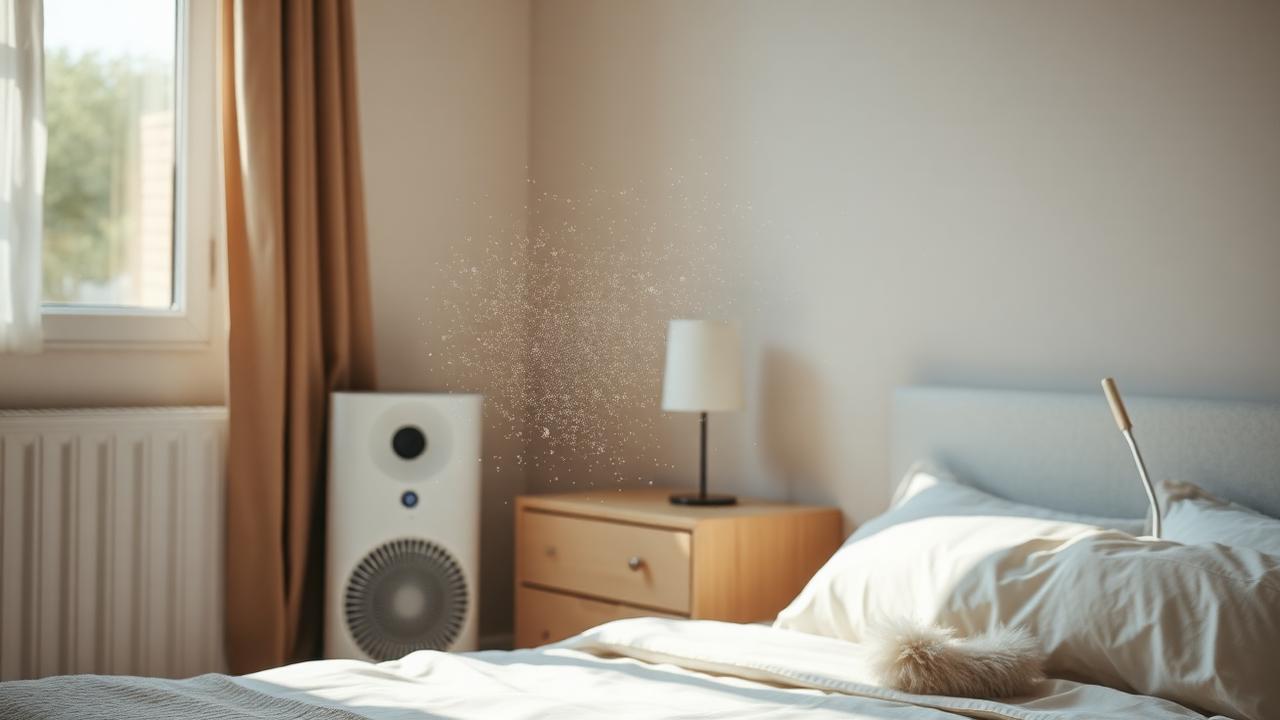
- Run an Air Purifier: Position an air purifier equipped with a True HEPA filter near your windows to capture airborne skin cells and dust mite fecal matter before it settles into the drapery.
- Regular Dusting Protocol: Always dust surfaces using a damp microfiber cloth rather than a dry feather duster, which merely launches allergen particles directly into your curtain fabrics.
Conclusion
You do not need to haul heavy, delicate, or dry-clean-only window treatments to the laundry to maintain an allergy-free home. By combining slow-pass HEPA vacuuming with high-temperature steam cleaning or targeted freezing, you can eliminate live dust mites and neutralize allergens effectively while preserving the texture, structure, and color of your curtains.
Cleneus is reader-supported. Pages carry display advertising and some outbound product links may earn us a commission, which never changes the methods we recommend. Read our disclosure.