
Can You Clean Natural Stone with Castile Soap Safely? A Complete Guide
Learn how to clean natural stone with Castile soap safely. Discover proper dilution ratios, pH details, and techniques to prevent cloudy residue on stone.
Yes, you can clean natural stone with Castile soap safely. Unlike acidic cleaners such as vinegar, lemon juice, or bleach, pure liquid Castile soap is a mild, vegetable-oil-based surfactant with a gentle alkaline profile. When properly diluted in warm water, it will not etch, pit, or strip the protective sealants on sensitive stone surfaces like marble, travertine, granite, limestone, or slate.
However, because Castile soap is made from saponified plant oils (typically olive, coconut, hemp, or jojoba), using too much soap or mixing it with hard water can leave behind a dull, hazy film. Following exact dilution ratios and proper rinsing techniques is essential for a streak-free, undamaged finish.
Why Castile Soap Is Safe for Natural Stone
Natural stones containing calcium carbonate—such as marble, travertine, limestone, and onyx—are chemically sensitive to acids. When an acid with a pH below 6.0 touches these surfaces, a chemical reaction dissolves the calcium carbonate, creating permanent dull patches known as "etch marks."
Liquid Castile soap is completely free of harsh acids, chelating agents, synthetic detergents, and artificial fragrances. In its concentrated form, Castile soap typically has a pH between 8.5 and 9.3. When diluted in water for routine cleaning, the working solution's pH drops closer to 7.5 to 8.0—an ideal, non-corrosive range for natural mineral surfaces.
- Non-Acidic Formulation: Zero risk of chemical etching on polished or honed calcium-based stones.
- Sealant Preservation: Does not break down topical penetrating impregnators or resin sealers applied to porous stone.
- Biodegradable and Non-Toxic: Emits zero volatile organic compounds (VOCs), making it safe for food preparation zones like kitchen granite countertops.
Castile Soap Compatibility Across Stone Types
Different natural stones have varying mineral structures, porosities, and tolerances. Here is how Castile soap performs across the most common household stones:
Marble and Travertine
Both marble and travertine are highly susceptible to acid etching. Castile soap is one of the safest green cleaning agents for both polished and honed varieties. Always wipe away puddles promptly to prevent water absorption in travertine's natural voids.
Granite and Quartzite
Granite and quartzite are composed primarily of quartz and feldspar, making them harder and more acid-resistant than marble. Castile soap safely lifts grease and cooking residues from these surfaces without breaking down the penetrating sealer.
Slate and Soapstone
Slate and soapstone handle Castile soap exceptionally well. Soapstone is chemically inert and non-porous, meaning Castile soap will clean the surface without lifting any mineral oil treatments previously applied to enhance its dark color.
Limestone
Like marble, limestone is very soft and reacts swiftly to acidic substances. Mild Castile soap solutions remove organic grime and dirt from limestone floor tiles and shower surrounds without causing surface erosion.
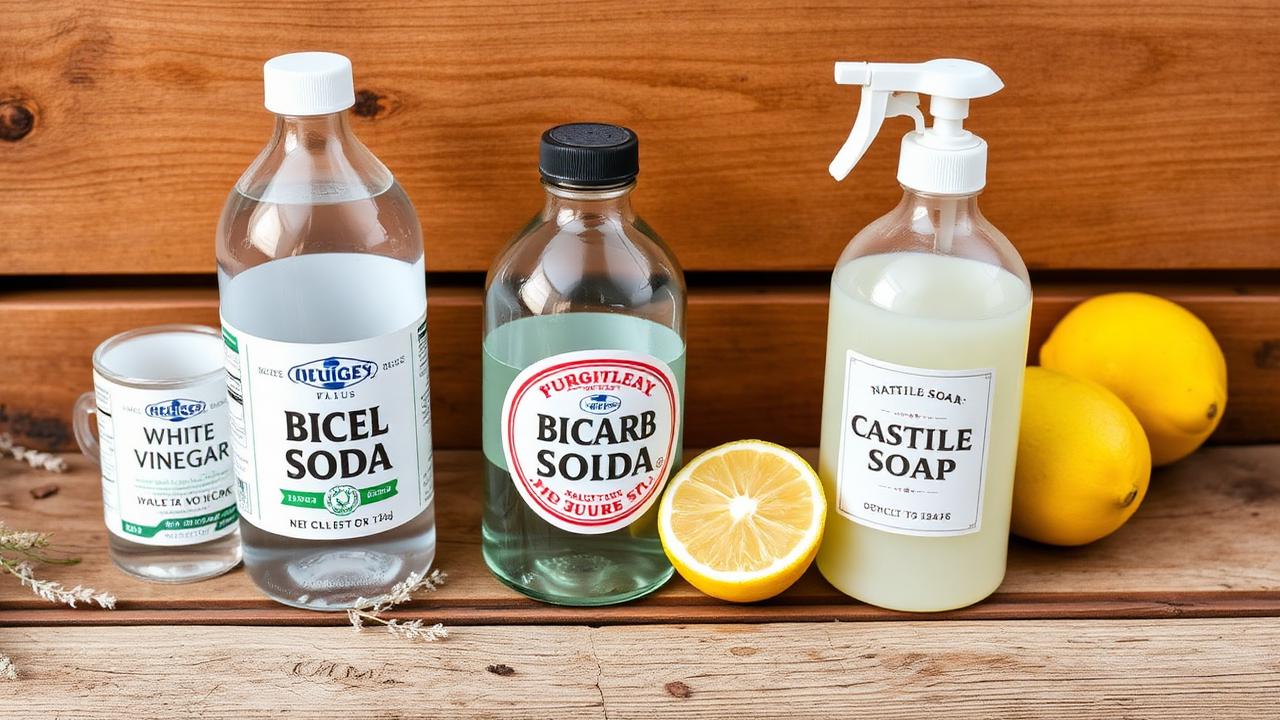
Castile Soap vs. Other Cleaning Agents for Stone
Understanding how Castile soap compares to other common household cleaners helps prevent accidental surface damage.
| Cleaning Agent | pH Level | Safe for Natural Stone? | Risk Factor | Best Use Case |
|---|---|---|---|---|
| Diluted Castile Soap | ~7.5 – 8.5 | Yes | Residue buildup if over-concentrated | Daily wipe-downs, light degreasing, mop cleaning |
| Distilled White Vinegar | ~2.5 | No | Severe acid etching and pitting | Glass, ceramic tile (never natural stone) |
| Baking Soda Paste | ~8.5 – 9.0 | Use with Caution | Abrasive scratching on polished finishes | Spot poultice for oil stains (do not scrub) |
| Mild Dish Soap (Synthetic) | ~7.0 – 8.0 | Yes | Streaking if not rinsed thoroughly | Quick kitchen cleanup |
| Specialty Stone Cleaner | ~7.0 | Yes | Higher cost, proprietary chemicals | High-traffic stone floors, deep restoration |
How to Clean Natural Stone with Castile Soap (Step-by-Step)
Using the correct measurements prevents the fatty acids in Castile soap from forming a cloudy soap scum layer on your stone. Follow these recipes and steps for daily counters and floors.
Recipe for Countertop Spray
- Warm Water (Distilled preferred): 2 cups (16 fl. oz. / 475 ml) at 105°F to 115°F
- Liquid Castile Soap: 1/2 teaspoon (2.5 ml)
- Spray Bottle: 16 oz clean plastic or glass spray bottle
Recipe for Floor Mopping
- Warm Water: 1 gallon (3.8 liters)
- Liquid Castile Soap: 1 tablespoon (15 ml)
- Microfiber Mop: Flat-head or spin mop (avoid coarse string mops)
Step-by-Step Cleaning Process
- Clear Debris: Sweep or dust-mop floors with a dry microfiber pad to remove loose grit. On countertops, brush away dry crumbs using a dry microfiber cloth to avoid dragging abrasive particles across the stone.
- Mist the Surface: Lightly spray the diluted Castile soap solution onto the stone. Avoid soaking the area; a fine, even mist is sufficient to break down surface oils.
- Wipe Along the Grain: Using a clean, damp microfiber cloth folded into quarters, wipe the surface in smooth, overlapping strokes. Flip the cloth to a fresh side as it collects soil.
- Rinse with Clean Water: Dampen a separate microfiber cloth with pure, clean water and wipe down the stone to remove any residual soap.
- Buff Dry: Immediately dry the surface with a plush, dry microfiber towel. Buffing removes remaining moisture and prevents water spots, especially on high-gloss marble and dark granite.
Avoiding the Castile Soap "Haze" and Soap Scum
The most common issue homeowners encounter when using Castile soap on stone is a milky, dull film. This happens for two reasons:
1. Hard Water Reaction
Castile soap contains genuine saponified vegetable oils. When these oils encounter hard water (water rich in calcium and magnesium ions), they bind together to create an insoluble precipitate: soap scum. If your home has hard tap water (over 7 grains per gallon), dilute your Castile soap exclusively with distilled or demineralized water for spray bottles.
2. Over-Concentration
Castile soap is concentrated. Adding multiple tablespoons of soap to a small spray bottle will leave excess oils on the stone surface. Stick strictly to 1/2 teaspoon per 2 cups of water for routine countertop maintenance.
How to Remove Castile Soap Residue
If your natural stone has developed a hazy film from previous Castile soap use:
- Mix 1 gallon of warm distilled water with 2 tablespoons of 70% isopropyl rubbing alcohol (isopropyl alcohol is pH-neutral and evaporates rapidly without harming stone).
- Mop or wipe the stone with this solution using a clean microfiber cloth.
- Buff dry immediately with a clean, dry towel to lift the soap film.
Conclusion
Castile soap is a completely safe, non-toxic, and eco-friendly choice for cleaning all varieties of natural stone. Because it lacks acids and harsh solvents, it protects your stone's structural integrity and preserves existing sealers. By using low concentrations (1/2 teaspoon per pint of water), soft microfiber cloths, and a final buffing step with a dry towel, you can maintain lustrous, damage-free stone surfaces throughout your home.
Cleneus is reader-supported. Pages carry display advertising and some outbound product links may earn us a commission, which never changes the methods we recommend. Read our disclosure.