
How to Clean Bathroom Mirror Without Leaving Lint or Streaks
Learn how to clean a bathroom mirror without streaks or lint using DIY vinegar solutions, flat-weave microfiber cloths, and proper wiping techniques.
To clean a bathroom mirror without leaving lint or streaks, spot-clean stubborn residue like toothpaste or hairspray with 70% isopropyl alcohol, then wipe the mirror using a 1:1 mixture of distilled water and white vinegar applied to a flat-weave microfiber cloth. Wipe from top to bottom in a continuous "S" pattern, followed immediately by a quick buff with a clean, dry microfiber cloth. Avoid paper towels, terry cloth, and hard tap water, which are the primary culprits behind residual lint and mineral haze.
The Science Behind Streaks and Lint on Mirrors
Mirror streaks and lint deposits occur due to three main factors: mineral deposits in tap water, residue from chemical glass cleaners, and improper cleaning textiles. Most standard tap water contains dissolved calcium and magnesium. When tap water evaporates off glass, these dissolved solids stay behind as visible cloudy lines.
Furthermore, standard paper towels and cotton bath towels are composed of loose cellulose and spun fibers. When dragged across high-friction glass, these fibers fracture and deposit static-charged lint across the surface. Many commercial aerosol glass cleaners also contain synthetic surfactants, dyes, and fragrances that do not evaporate completely, leaving an oily film that captures dust and amplifies steam fog.
Essential Supplies for a Spotless Finish
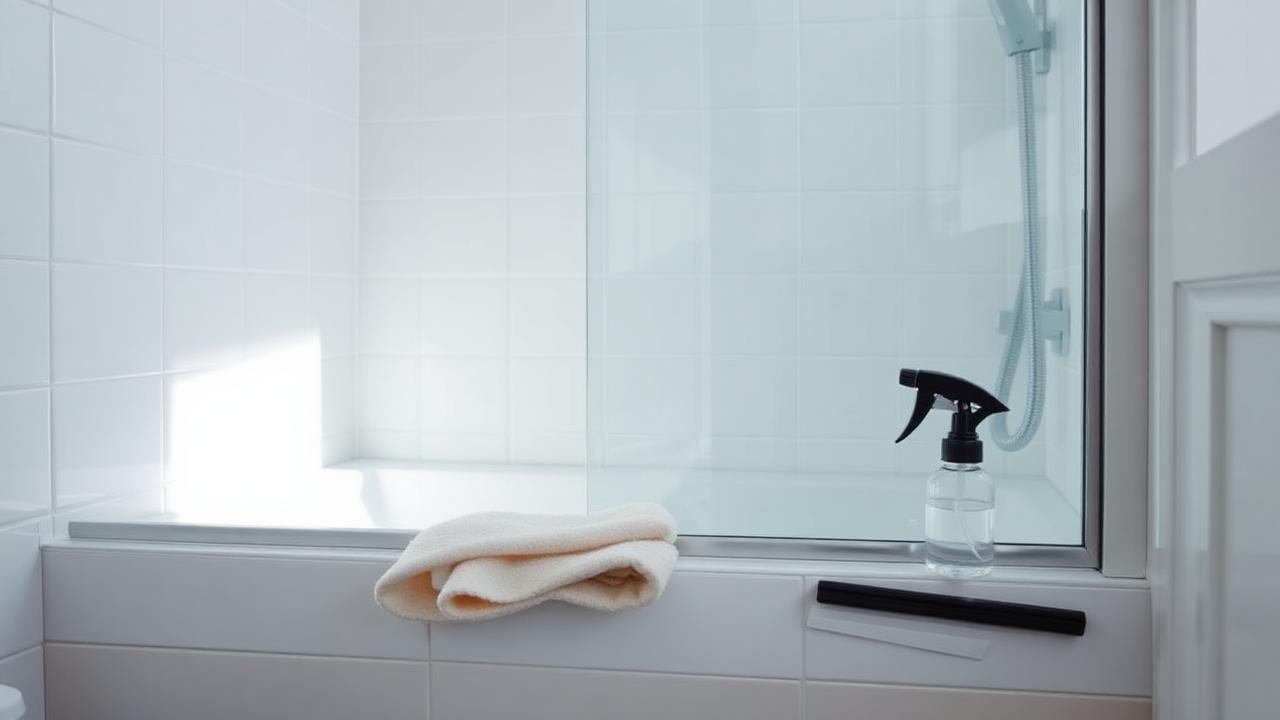
Achieving a crystal-clear reflection requires tools that lift oils without shedding material:
- Flat-weave or waffle-weave microfiber cloths: Use cloths specifically rated at 300 GSM (grams per square meter) or higher with no plush pile. You need at least two cloths: one for washing and one for dry buffing.
- 70% Isopropyl (rubbing) alcohol: Breaks down greasy resins from hairspray, lotion, and toothpaste splatter on contact.
- Distilled white vinegar (5% acidity): Naturally dissolves water spots, mineral scale, and soap scum without leaving surfactants behind.
- Distilled water: Mineral-free water ensures that no dissolved solids are left on the glass after evaporation.
- Spray bottle: A standard plastic misting bottle with an adjustable nozzle.
- Cotton cosmetic pads: For targeted pre-cleaning of heavy build-up.
Step-by-Step Cleaning Process
Step 1: Pre-Treat Toothpaste and Hairspray Buildup
Before wiping the entire glass surface, address spot-bound grime. Moisten a cotton pad or corner of a microfiber towel with 70% isopropyl alcohol. Rub directly over dried toothpaste splatters, hairspray droplets, and makeup smudges. The alcohol dissolves these stubborn polymers in roughly 10 to 15 seconds. If you skip this step and spray liquid across the whole mirror, your cloth will drag these dissolved fats and sugars over the entire surface, creating wide greasy streaks.
Step 2: Mix the Streak-Free Cleaning Solution
Combine equal parts distilled water and distilled white vinegar in your spray bottle:
- 1 cup (240 ml) distilled water
- 1 cup (240 ml) white vinegar
- Optional boost for high-humidity bathrooms: Add 2 tablespoons (30 ml) of 70% isopropyl alcohol to speed up the evaporation rate.
Step 3: Mist the Cloth, Not the Mirror
Spray your vinegar-water solution directly onto the first microfiber cloth until it is damp, not dripping wet (typically 3 to 4 pumps). Avoid spraying the mirror directly, particularly near the edges. When liquid runs down the glass and seeps behind the frame or bottom edge, it attacks the silver backing in a chemical reaction known as "desilvering," which permanently turns mirror edges black.
Step 4: Execute the "S" Pattern
Fold your microfiber cloth into quarters to create eight flat, usable sides. Starting at the top-left corner of the mirror, pull the cloth horizontally to the top-right corner. Without lifting the cloth, sweep down and reverse direction, snaking back and forth across the glass in a continuous "S" pattern until you reach the bottom edge. Never wipe in circular motions, as circular paths merely redistribute debris and create circular glare patterns visible in direct light.
Step 5: Immediate Dry Buffing
Take your second, completely dry microfiber cloth. Starting at the top, repeat the wiping motion or address the outer perimeter where moisture gathers. Buffing the glass within 30 to 45 seconds of washing removes any lingering moisture droplets before they can air-dry into faint water marks.
Comparison of Mirror Cleaning Methods and Tools
| Cleaning Tool / Method | Streak Risk | Lint Risk | Effectiveness on Heavy Residue | Best For |
|---|---|---|---|---|
| Flat-Weave Microfiber + Distilled Vinegar Solution | Very Low | None | High | Everyday deep cleaning and streak-free finish |
| Glass Squeegee + Mild Dish Soap Solution | Low | None | Very High | Large, frameless vanity mirrors and shower glass |
| Paper Towels + Commercial Blue Glass Cleaner | High | High | Moderate | Quick cleanups where perfection is not required |
| Newspaper + Glass Cleaner | Moderate | Low | Moderate | Budget cleaning (may leave petroleum ink stains on frame) |
| Cotton Terry Washcloth + Tap Water | Very High | Very High | Low | Emergency wipe-downs only; leaves heavy lint and haze |
Common Mistakes That Cause Streaks and Haze
- Cleaning a steamy mirror: Attempting to wipe down a mirror immediately after a hot shower traps condensed moisture, airborne soap particles, and humidity against the glass, guaranteeing heavy streaking. Always clean the mirror when the bathroom is cool and dry.
- Washing microfiber with fabric softener: Fabric softeners and dryer sheets coat microfiber strands in a waxy silicone layer that destroys their absorbency and smears grease across glass surfaces. Wash microfiber cloths in warm water with fragrance-free liquid detergent, and air-dry or tumble-dry on low heat without additives.
- Using too much cleaning solution: Over-saturating the mirror leaves pools of liquid that the cloth cannot absorb, resulting in drying lines and chemical run marks.
- Using tap water in hard water regions: If your household water has high mineral content (above 120 PPM), using it on mirrors leaves fine mineral dust upon evaporation. Always use distilled water for mixing solutions.
How to Prevent Mirror Fogging and Resoiling
To keep your mirror clean longer and reduce steam condensation after cleaning, apply a thin layer of standard, non-gel shaving cream across the clean surface. Buff it completely clear with a dry microfiber cloth. The surfactants in the shaving cream leave an invisible, microscopic barrier that prevents water droplets from coalescing into fog for up to three weeks.
Additionally, always run your bathroom exhaust fan for 15 to 20 minutes following every shower to evacuate excess moisture, aerosolized hair products, and airborne body oils that settle onto glass surfaces.
Conclusion
Achieving a flawless, lint-free, streak-free bathroom mirror does not require expensive commercial chemicals. By pre-treating residue with 70% isopropyl alcohol, using a 1:1 distilled water and vinegar spray on flat-weave microfiber, and employing a disciplined top-to-bottom "S" wiping pattern, you eliminate both physical fibers and chemical residue for lasting clarity.
Cleneus is reader-supported. Pages carry display advertising and some outbound product links may earn us a commission, which never changes the methods we recommend. Read our disclosure.