
How to Create a Rotating Zone Cleaning Schedule
Learn how to create a rotating zone cleaning schedule. Break your home into manageable zones and deep clean in just 15 to 30 minutes a day.
To create a rotating zone cleaning schedule, divide your home into four or five distinct physical zones, assign each zone to a specific week of the month, and dedicate 15 to 30 minutes each day to deep-cleaning tasks in that active zone. This system pairs a light daily baseline cleaning routine with focused, rotating deep cleaning, ensuring every area of your home receives detailed attention once a month without causing weekend burnout.
What Is a Rotating Zone Cleaning Schedule?
A rotating zone cleaning schedule is a home maintenance framework that splits your living space into manageable sections (zones). Instead of attempting to deep clean your entire house in a grueling 6-hour weekend marathon, you focus exclusively on one zone per week. Over the course of a month, every room receives detailed maintenance, including baseboard scrubbing, appliance detailing, and upholstery care.
This system operates on two distinct cleaning tiers:
- Daily Baseline (10 to 15 minutes): Non-negotiable maintenance tasks such as making beds, running the dishwasher, wiping kitchen counters with an all-purpose spray, and taking out high-traffic trash.
- Zone Deep Cleaning (15 to 30 minutes): Targeted, high-impact tasks inside the designated zone for that week, such as descaling showerheads, vacuuming mattress seams, or wiping down cabinet faces.
Step 1: Divide Your Home into 5 Core Zones
Most floor plans divide naturally into five zones. If a month has four weeks, the fifth zone rolls into the first few days of the next month, or serves as a seasonal overflow zone.
- Zone 1: Entryway, Foyer, and Dining Room. The public transition spaces of the home.
- Zone 2: Kitchen, Pantry, and Utility Closets. The highest-traffic area requiring the most degreasing and sanitizing.
- Zone 3: Bathrooms and Laundry Room. High-moisture areas prone to soap scum, limescale, and lint buildup.
- Zone 4: Primary Bedroom and Closets. Personal spaces needing dust mitigation and linen refreshing.
- Zone 5: Living Room, Family Room, and Home Office. Shared leisure spaces with upholstery, electronics, and high dust accumulation.
Step 2: Build Your Zone Deep-Cleaning Task Lists
For each zone, list 5 to 7 detailed cleaning tasks that go beyond daily tidying. These are tasks you rarely do during a quick surface clean. Below is a blueprint of typical zone tasks, tools required, and realistic time investments.
| Zone | Target Area | Core Deep-Cleaning Tasks | Tools & Solutions | Est. Time |
|---|---|---|---|---|
| Zone 1 | Entry & Dining | Wipe light switches/doorframes; vacuum dining chair upholstery; polish wood dining table; shake out entry rugs. | Microfiber cloths (300 GSM), wood polish or mineral oil, HEPA vacuum with brush attachment. | 20 mins |
| Zone 2 | Kitchen & Pantry | Degrease range hood filters; wipe cabinet fronts; sanitize trash can interior; clean microwave interior; wipe refrigerator seals. | Warm water (110°F) with dish soap, baking soda paste, oxygen bleach, multi-surface spray. | 30 mins |
| Zone 3 | Bathrooms | Descale showerhead; scrub grout lines; sanitize exhaust fan covers; wash shower curtain liners; deep-clean vanity drawers. | 5% white distilled vinegar, nylon grout brush, 3% hydrogen peroxide, microfiber glass cloth. | 25 mins |
| Zone 4 | Bedrooms | Vacuum mattress tops with upholstery tool; wash mattress protectors and duvets at 140°F; wipe down baseboards and headboards. | Enzyme laundry detergent, HEPA vacuum, damp microfiber cloth with neutral pH cleaner. | 20 mins |
| Zone 5 | Living & Office | Dust electronics with dry electrostatic duster; vacuum under furniture cushions; sanitize remotes and keyboards; clean window tracks. | 70% isopropyl alcohol wipes, crevice vacuum tool, soft-bristled detailing brush. | 20 mins |
Step 3: Structure Your Weekly Workflow
To keep the system sustainable, execute your zone tasks Monday through Friday for 15 to 20 minutes per day, leaving weekends free from deep-cleaning duties. Follow this daily rhythm within the active zone:
- Monday (Declutter & High Dusting): Clear surface clutter. Use an extendable microfiber duster to remove cobwebs from ceiling corners, light fixtures, ceiling fan blades, and the tops of doorframes.
- Tuesday (Vertical Surfaces & Glass): Wipe down walls, spot-clean switch plates, wash interior windows, and wipe baseboards using warm water mixed with a few drops of dish soap.
- Wednesday (Deep Surface Detailing): Clean specific appliances, sanitize cabinet hardware, or deep-clean grout and tile surfaces.
- Thursday (Soft Surfaces & Upholstery): Vacuum under sofa cushions, spot-treat upholstery stains with an enzyme-based fabric cleaner, and launder specialty textiles (pillow covers, throws).
- Friday (Floors & Final Details): Move light furniture to vacuum thoroughly into edges and corners, followed by a targeted mop using a microfiber flat mop and zone-appropriate floor cleaner.
Step 4: Prepare Caddies and Supplies
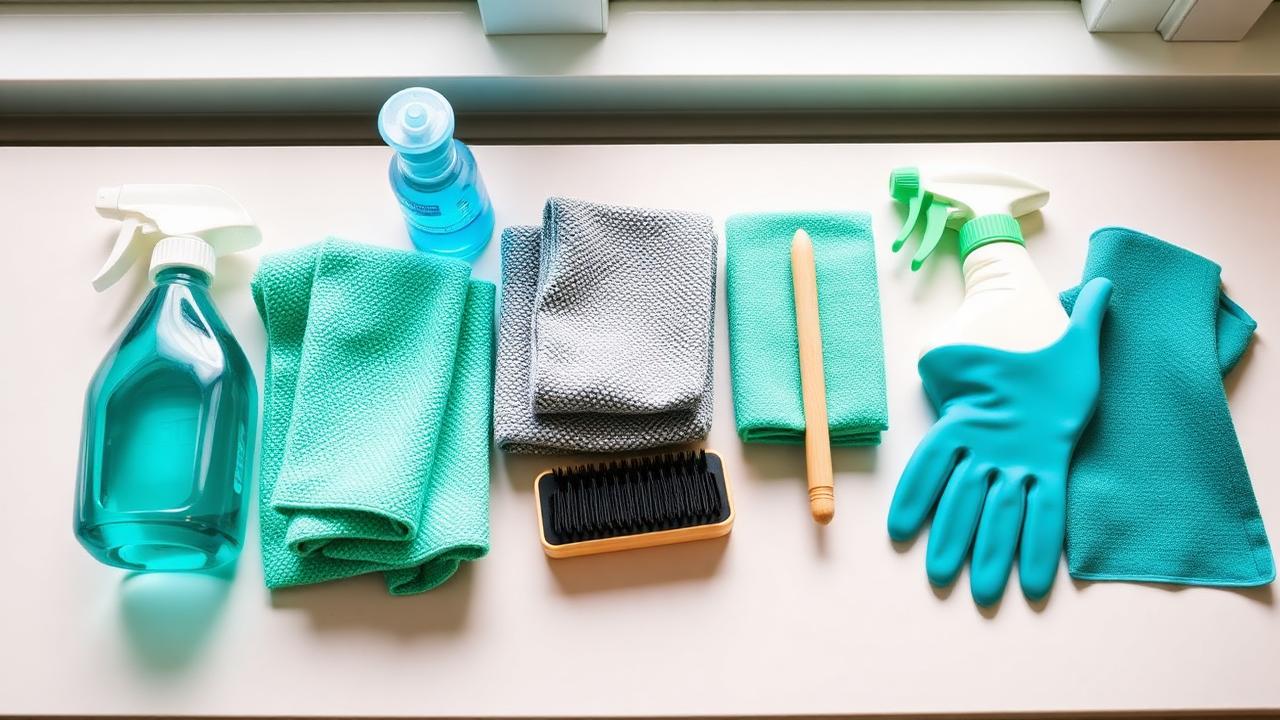
Searching for supplies wastes cleaning time. Assemble a dedicated cleaning caddy equipped with essential products so you can start immediately:
- Multi-surface neutral pH cleaner: For countertops, sealed stone, and painted woodwork.
- Distilled white vinegar (5% acidity): Mixed 1:1 with water in a spray bottle for mineral deposits, hard water stains, and mirrors.
- Microfiber cloths: Keep at least 8 to 10 high-density (300+ GSM) cloths in the caddy. Assign colors by area (e.g., yellow for bathrooms, blue for glass, green for living areas).
- Scrub brushes: A stiff-bristled grout brush and a soft-bristled detailing brush for tight fixtures.
- Disinfectant: 70% isopropyl alcohol or hydrogen peroxide spray for high-touch points.
Step 5: Rules to Keep the Schedule on Track
Maintain consistency and prevent schedule collapse by following three fundamental rules:
- Respect the Timer: Set a timer for 20 minutes. When the timer sounds, stop cleaning, even if the entire list is not complete. The rotating schedule ensures you will return to that zone in four weeks.
- Never Skip the Daily Baseline: Zone cleaning fails if daily clutter accumulates. Complete your 10-minute daily reset before starting your zone task.
- Do Not Play Catch-Up: If you miss a day or a week due to illness or travel, do not attempt double sessions. Simply advance to the scheduled zone for the current calendar week.
Conclusion
A rotating zone cleaning schedule replaces chaotic, exhausting cleaning marathons with predictable, bite-sized tasks. By spending 15 to 30 minutes a day on a dedicated zone, you systematically maintain every corner of your home, preserve your fixtures and finishes, and keep your living spaces consistently clean year-round.
Cleneus is reader-supported. Pages carry display advertising and some outbound product links may earn us a commission, which never changes the methods we recommend. Read our disclosure.