
How to Get Tomato Sauce Stains Out of Plastic Food Containers: 5 Proven Methods
Remove stubborn tomato sauce and grease stains from plastic food containers using baking soda, sunlight, paper towels, and simple household ingredients.
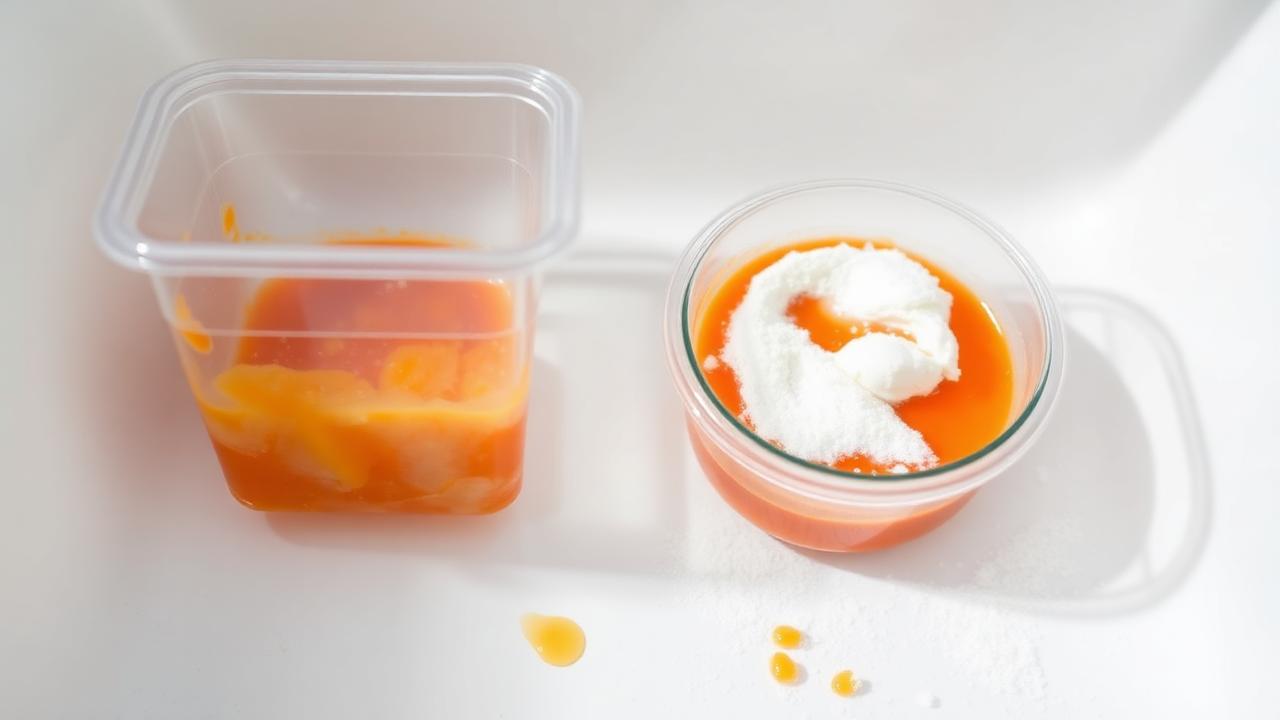
To get tomato sauce stains out of plastic food containers immediately, make a thick paste using 2 tablespoons of baking soda, 1 teaspoon of liquid dish soap (such as Dawn), and 1 tablespoon of warm water (105°F to 115°F). Spread the paste across the discolored plastic, let it sit for 30 minutes, and scrub firmly with a non-abrasive sponge before rinsing with warm water. For older, set-in stains, placing lemon juice-coated containers in direct midday sunlight for 3 to 4 hours will break down the lycopene pigments naturally through UV photolysis.
Why Tomato Sauce Stains Plastic So Easily
Tomato sauce stains are notoriously stubborn due to a natural chemical interaction between the food and the storage container. Understanding this interaction helps ensure you pick the right removal method without ruining your plasticware:
- Lycopene Pigmentation: Tomatoes get their deep red color from lycopene, a bright carotenoid pigment. Lycopene is hydrophobic (water-repelling) and lipophilic (fat-soluble). Because it repels water, standard soap-and-water washing cannot easily rinse it away once it bonds to a surface.
- Porous Plastics: Most food storage containers are manufactured from polypropylene (plastic resin code #5) or low-density polyethylene (resin code #4). While these plastics appear smooth, they contain microscopic pores.
- Heat Absorption: When you microwave tomato sauce or pour hot marinara directly into a plastic bowl, heat causes the microscopic pores of the plastic to expand. The oils carrying the dissolved lycopene penetrate deep into the material. As the container cools, the pores constrict, trapping the red pigment inside the plastic matrix.
Method 1: The Baking Soda and Dish Soap Scrub (Best Overall)
Baking soda (sodium bicarbonate) provides gentle mechanical abrasion without scratching the plastic, while grease-cutting dish soap dissolves the oils binding the lycopene.
Materials Needed
- 2 tablespoons baking soda
- 1 teaspoon concentrated grease-cutting dish soap
- 1 to 2 tablespoons warm water (approx. 110°F / 43°C)
- 1 non-scratch sponge or microfiber cloth
Step-by-Step Instructions
- Step 1: Rinse the container with warm water to remove loose food residue. Do not use boiling water, as extreme heat can drive remaining pigments deeper.
- Step 2: In a small bowl, combine 2 tablespoons of baking soda and 1 teaspoon of dish soap. Add 1 tablespoon of warm water and stir until a smooth, spreadable paste forms. If the mixture is too dry, add water a few drops at a time.
- Step 3: Apply the paste directly over the red and orange stains using your fingers or the soft side of a sponge, ensuring full coverage.
- Step 4: Let the paste sit undisturbed for 30 to 45 minutes to draw the oily pigments out of the plastic pores.
- Step 5: Take a damp, non-scratch sponge and scrub the stained areas in circular motions for 60 to 90 seconds.
- Step 6: Rinse thoroughly with warm running water and dry with a clean towel. Repeat once if a faint shadow remains.
Method 2: The Paper Towel and Soap Shake Trick (Fastest Method)
This viral cleaning hack works through rapid mechanical agitation. The paper towel acts as an absorbent sponge that attracts and traps free-floating oil molecules as the surfactant breaks them loose from the plastic walls.
Materials Needed
- 1 dry paper towel sheet (standard 2-ply)
- 1 to 2 tablespoons liquid dish soap
- 1/2 cup warm water (approx. 110°F / 43°C)
- Container lid (must seal tightly)
Step-by-Step Instructions
- Step 1: Tear one sheet of paper towel into 3 or 4 smaller pieces and place them inside the stained container.
- Step 2: Add 1 to 2 tablespoons of liquid dish soap directly onto the paper towel pieces.
- Step 3: Pour in 1/2 cup of warm water (fill roughly one-quarter to one-third of the container volume).
- Step 4: Snap the lid securely onto the container to prevent leaks.
- Step 5: Shake the container vigorously in all directions for 45 to 60 seconds. The paper towel will whip against the interior walls, scrubbing away grease and trapped lycopene.
- Step 6: Remove the lid, discard the soiled, red-tinted paper towel in the trash, and rinse the container with warm water.
Method 3: Sunlight and Lemon Juice (Best for Deep, Baked-in Stains)
Lycopene is unstable when exposed to ultraviolet (UV) radiation. Sunlight breaks the chemical double bonds of the lycopene molecule through a process called photodegradation, rendering the pigment completely colorless.
Materials Needed
- 2 tablespoons fresh or bottled lemon juice
- Direct outdoor sunlight
- Paper towel or basting brush
Step-by-Step Instructions
- Step 1: Wash the container thoroughly to remove any residual surface grease.
- Step 2: Pour 2 tablespoons of lemon juice into the container. Use a paper towel or brush to coat the stained interior surfaces evenly with the juice. The citric acid aids in lifting surface residues.
- Step 3: Place the uncovered container outside in an area that receives direct, unshaded sunlight (such as a patio table, deck railing, or outdoor windowsill).
- Step 4: Leave the container in the sun for 3 to 5 hours. For optimal UV exposure, conduct this process between 10:00 AM and 3:00 PM.
- Step 5: Bring the container inside and inspect it. If stubborn spots remain, reapply lemon juice and leave it in the sun for another 2 hours.
- Step 6: Wash with regular dish soap and warm water to remove lemon residue.
Method 4: Distilled White Vinegar Soak (Best for Stains with Lingering Odors)
Tomato sauces often leave behind acidic odors alongside discoloration. A 5% distilled white vinegar solution cuts through mineral deposits, eliminates smells, and lifts surface oils without degrading food-grade plastics.
Materials Needed
- 1 cup distilled white vinegar (5% acidity)
- 1 cup warm water (110°F / 43°C)
- 1 teaspoon liquid dish soap
Step-by-Step Instructions
- Step 1: Mix equal parts distilled white vinegar and warm water inside the stained container until the liquid completely submerges all stained areas.
- Step 2: Stir in 1 teaspoon of liquid dish soap to emulsify lingering surface oils.
- Step 3: Allow the container to soak for 2 to 4 hours at room temperature. For severe discoloration, let it sit overnight (8 to 12 hours).
- Step 4: Empty the solution and scrub the plastic with a non-abrasive sponge for 30 seconds.
- Step 5: Rinse thoroughly with warm tap water and air dry.
Method 5: Oxygen Bleach or Hydrogen Peroxide (Heavy-Duty Oxidation)
For decades-old plasticware or heavily baked-in sauce rings, a mild oxidizing agent will decolorize the organic stain molecules without releasing toxic fumes or degrading the structural integrity of polypropylene.
Materials Needed
- 3% standard household hydrogen peroxide OR 1 tablespoon sodium percarbonate powder (such as OxiClean)
- Hot tap water (approx. 120°F / 49°C)
Step-by-Step Instructions
- Step 1: If using hydrogen peroxide (3%), pour enough directly into the container to submerge the stained bottom and sides. If using oxygen bleach powder, add 1 tablespoon of powder and fill the container with hot tap water.
- Step 2: Let the solution effervesce and sit for 1 to 2 hours.
- Step 3: Pour out the liquid and rinse the container thoroughly with warm water.
- Step 4: Wash the container with standard dish soap and hot water before storing or using for food.
Tomato Stain Removal Methods Compared
| Method | Primary Agent | Time Required | Best For | Abrasiveness |
|---|---|---|---|---|
| Baking Soda Paste | Sodium bicarbonate + Soap | 30–45 mins | Fresh to moderate grease stains | Low (Gentle) |
| Paper Towel Shake | Mechanical friction + Soap | 1–2 mins | Quick daily cleanups; light stains | None |
| Sunlight & Lemon | UV Photodegradation | 3–5 hours | Severe, baked-in, old stains | None |
| Vinegar Soak | 5% Acetic acid | 2–8 hours | Stains combined with strong odors | None |
| Oxygen Bleach | Sodium percarbonate / H2O2 | 1–2 hours | Cloudy, deeply penetrated stains | None |
How to Prevent Future Tomato Sauce Stains on Plastic
Preventing stains is significantly easier than extracting pigments from microscopic plastic pores. Implement these food prep and storage rules:
- Never Microwave Sauce in Plastic: Always transfer tomato-based meals to a ceramic bowl or heat-resistant glass container (such as Pyrex) before microwaving. Microwaving heats the oils past 200°F (93°C), instantly opening plastic pores and permanently bonding lycopene.
- Create an Oil Barrier: Lightly mist the inside of clean, dry plastic containers with a thin coat of neutral cooking oil spray (such as canola or olive oil) before filling them with cold or room-temperature tomato leftovers. The oil creates a temporary sacrificial barrier that prevents sauce from touching the plastic surface.
- Rinse Immediately with Cold Water: When emptying leftover sauce, rinse the container with cold water first. Hot water causes plastic pores to open and sets protein- and oil-based stains, whereas cold water washes away surface sauce without opening the pores.
- Line Containers with Parchment: For acidic casseroles or thick pasta bakes, place a sheet of unbleached parchment paper inside the plastic container before adding the food.
Frequently Asked Questions
Can I use chlorine bleach to remove tomato stains from plastic food containers?
Avoid using chlorine bleach on food containers. Bleach can degrade and pit polypropylene and polyethylene, creating microscopic crevices where bacteria can harbor. Furthermore, plastic can absorb chlorine molecules, creating toxic chemical off-gassing and contaminating future meals.
Does washing stained plastic in the dishwasher fix the problem?
No. Placing a tomato-stained container into the dishwasher often worsens the issue. The high-heat drying cycle (which can reach 155°F to 170°F / 68°C to 77°C) bakes the lycopene pigment deep into the plastic. Additionally, free-floating tomato sauce particles in the wash water can redeposit and stain other light-colored plastic items in the same load.
Are tomato-stained plastic containers safe to continue using?
Yes. Lycopene is a harmless, food-safe organic compound. A red or orange stain does not mean the container is dirty or harboring active bacteria, provided the container has been thoroughly sanitized with soap and hot water. However, if the plastic feels sticky, pitted, or brittle, the polymer has begun degrading and the container should be recycled or discarded.
Can isopropyl rubbing alcohol remove red tomato stains from plastic?
Rubbing alcohol (70% or 91% isopropyl) is an effective solvent for dissolving lycopene and tomato oils. Pour 2 to 3 tablespoons into the container, wipe the stained area with a cloth, and let it sit for 10 minutes. Always wash the container thoroughly with warm soapy water and rinse completely before using it for food again.
Cleneus is reader-supported. Pages carry display advertising and some outbound product links may earn us a commission, which never changes the methods we recommend. Read our disclosure.