How to Remove Baked-On Grease from Aluminum Baking Sheets Without Scratching
Learn how to safely remove baked-on grease from aluminum baking sheets without scratching using baking soda, peroxide, and gentle, proven techniques.
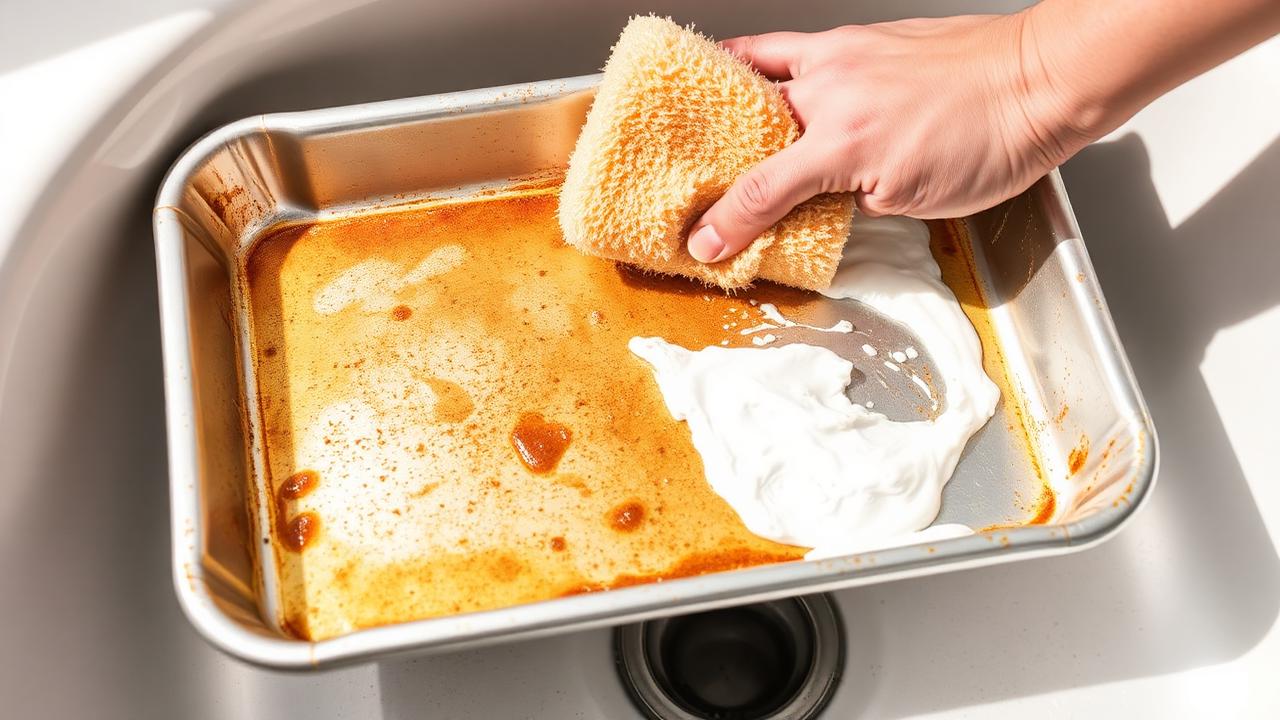
To remove baked-on grease from aluminum baking sheets without scratching, coat the surface with a paste made from 1/2 cup (90 g) of baking soda and 2 to 3 tablespoons (30 to 45 ml) of 3% hydrogen peroxide. Let the paste sit on the baked grease for 2 to 3 hours, then lift the softened residue using a non-scratch nylon scrub pad or a plastic pan scraper and rinse with warm water. Aluminum is a soft, reactive metal, so you must avoid steel wool, wire brushes, caustic oven cleaners, and dishwasher detergents to protect the sheet from permanent scratching and dark oxidation.
Why Aluminum Baking Sheets Require Specialized Cleaning
Standard aluminum sheet pans (such as commercial half-sheet pans) are prized in kitchens for their superior heat conductivity. However, aluminum has specific physical properties that make standard deep-cleaning techniques destructive:
- Soft Surface Hardness: Pure aluminum rates around 2.5 to 3 on the Mohs hardness scale. Steel wool (hardness ~4.5) and stainless steel scrubbers easily gouge and scratch the surface, creating micro-grooves where burnt oils collect permanently.
- Chemical Reactivity (pH Sensitivity): Aluminum reacts rapidly with highly alkaline substances (pH > 10) and strong acids (pH < 3). Caustic chemicals like sodium hydroxide (found in standard oven cleaners) dissolve the protective aluminum oxide layer, causing black discoloration, pitting, and rough surfaces.
- Dishwasher Incompatibility: Automatic dishwasher detergents contain sodium silicate and alkaline salts combined with high water temperatures (140°F to 160°F / 60°C to 71°C), causing rapid, irreversible oxidation that turns bare aluminum dark grey and chalky.
Method 1: The Baking Soda and Hydrogen Peroxide Paste (Best for Heavy, Polymerized Grease)
Polymerized cooking oil forms a hard, varnish-like coating over time. The combination of mildly abrasive baking soda (sodium bicarbonate) and 3% hydrogen peroxide breaks the chemical bonds of the oxidized fat molecules through mild effervescence without etching aluminum.
Materials Needed
- 1/2 cup (90 g) baking soda
- 2 to 4 tablespoons (30 to 60 ml) fresh 3% hydrogen peroxide
- A rigid nylon pan scraper or plastic spatula
- A non-scratch cellulose sponge or blue Scotch-Brite non-scratch scouring pad
- Warm water and liquid dish soap (e.g., Dawn)
Step-by-Step Instructions
1. Mix the Paste: In a small bowl, combine 1/2 cup of baking soda with enough 3% hydrogen peroxide to form a spreadable, frosting-like paste.
2. Apply to the Pan: Spread the paste evenly over the baked-on grease spots using the back of a spoon or a gloved hand. Ensure the grease spots are fully coated with a layer at least 1/8-inch (3 mm) thick.
3. Allow Dwell Time: Let the paste sit on the pan undisturbed for 2 to 4 hours. For severe buildup, you can leave it up to 8 hours. The peroxide and mild alkaline soda will penetrate the cross-linked oil layers.
4. Scrape the Residue: Hold a plastic pan scraper at a 45-degree angle and glide it firmly across the sheet. The softened, brown grease will lift off in sheets without contacting the aluminum with sharp edges.
5. Buff and Rinse: Use a damp non-scratch scouring pad with a drop of degreasing dish soap to buff away remaining traces. Rinse thoroughly with hot tap water (110°F to 120°F / 43°C to 49°C) and dry immediately with a clean microfiber towel to prevent water spots.
Method 2: Cream of Tartar and Boiling Water (Best for Overall Brightening and Light Grease)
Cream of tartar (potassium bitartrate) is a mild, safe acid with a pH of roughly 3.5. It naturally brightens dull, oxidized aluminum and loosens light grease without damaging the underlying metal.
Materials Needed
- 3 tablespoons (30 g) cream of tartar
- Hot or boiling water (enough to submerge the pan base, approximately 4 to 6 cups)
- Non-scratch scouring pad
Step-by-Step Instructions
1. Prepare the Pan: Place the baking sheet flat on a heat-resistant surface or across two stovetop burners if the pan is warp-resistant.
2. Create the Solution: Sprinkle 3 tablespoons of cream of tartar directly across the pan. Pour boiling water over the powder until the entire bottom surface is covered by roughly 1/4 inch of liquid. Stir gently with a wooden spoon to dissolve the powder.
3. Soak: Let the hot acidic solution soak into the grease for 60 to 90 minutes as the water cools to room temperature.
4. Wipe Clean: Scrub in small, circular motions using a blue non-scratch pad. The acid will have lifted both the light grease film and surface oxidation, leaving bright, clean aluminum. Wash with warm, soapy water, rinse, and dry.
Method 3: Bar Keepers Friend Cookware Powder (Fastest for Stubborn Spots)
Bar Keepers Friend uses oxalic acid and non-bleaching mineral abrasives (feldspar) that are formulated specifically not to scratch metal surfaces when used correctly with water.
Materials Needed
- Bar Keepers Friend Cleanser & Polish (powder or liquid cookware formula)
- Non-scratch sponge
- Microfiber drying cloth
Step-by-Step Instructions
1. Wet the Sheet: Wet the aluminum baking sheet with warm water.
2. Apply Cleanser: Sprinkle a light layer of powder over the stained areas. Use a wet sponge to spread it into a creamy slurry.
3. Work Quickly: Do not leave oxalic acid on raw aluminum for longer than 60 to 90 seconds. Gently rub the stained area using light pressure with the non-scratch sponge.
4. Rinse Extensively: Rinse the pan immediately under running water for at least 30 seconds to remove all chemical residues, then dry immediately.
Comparison of Cleaning Methods for Aluminum Baking Sheets
| Cleaning Method | Best Grease Level | Contact Time | Scratch Risk | Corrosion/Oxidation Risk |
|---|---|---|---|---|
| Baking Soda + Peroxide | Heavy / Baked-on | 2 to 4 hours | Zero (Safe) | Extremely Low |
| Cream of Tartar + Hot Water | Light to Moderate | 60 to 90 minutes | Zero (Safe) | None (Brightens metal) |
| Bar Keepers Friend | Moderate Spot Stains | 1 to 2 minutes max | Very Low | Moderate if left > 2 mins |
| Dishwasher Detergent Soak | Not Recommended | Overnight | Zero | Extreme (Turns metal black) |
| Steel Wool / Wire Brushes | Not Recommended | Immediate | Extreme (Severe gouging) |
Tools and Practices to Strictly Avoid
- Steel Wool (SOS / Brillo Pads): Stainless and carbon steel wires are significantly harder than aluminum and will strip the mill finish, leaving deep, permanent scratches.
- Oven Cleaner Sprays: Most commercial oven cleaners contain concentrated lye (sodium hydroxide). Applying this to aluminum creates hydrogen gas and corrosive sodium aluminate, destroying the sheet in minutes.
- Metal Utensils as Scrapers: Never use butter knives, metal spatulas, or razor blades. Opt exclusively for rigid polypropylene or nylon scrapers.
- Air Drying: Allowing aluminum sheets to air dry causes minerals in tap water to react with the surface, resulting in chalky white water spots.
How to Protect Aluminum Sheets from Future Grease Buildup
Preventing grease polymerization simplifies kitchen maintenance and extends the lifespan of commercial-grade aluminum cookware:
- Use Unbleached Parchment Paper: Line the pan with parchment paper rated to 425°F (218°C) before roasting vegetables or meats. Parchment absorbs excess fats and eliminates direct metal-to-oil baking.
- Deploy Silicone Baking Mats: For cookies, pastries, and sticky glazes, food-grade silicone mats provide a complete non-stick barrier that cleans with simple soap and water.
- Wash Immediately: Do not allow hot cooking oils to cool and solidify on the pan. While the pan is still slightly warm (around 100°F / 38°C), wipe excess oil with a paper towel and wash with warm water and a degreasing dish soap immediately.
Frequently Asked Questions
Can I use white vinegar to clean aluminum baking sheets?
Yes, but with limitations. White vinegar (5% acetic acid) can help remove mineral deposits and light stains, but it should not be left on bare aluminum for more than 10 to 15 minutes. Extended contact with acids can cause light pitting and surface dullness.
Why did my aluminum baking sheet turn dark gray or black?
Aluminum turns dark gray or black due to oxidation caused by high alkaline environments (such as a dishwasher cycle) or chemical reactions with lye-based cleaners. You can restore some brightness by boiling a solution of 2 tablespoons cream of tartar per quart of water directly on the pan for 10 minutes.
Is baked-on grease on aluminum sheets toxic?
No, polymerized cooking oil is not toxic, but degraded, carbonized grease can smoke at lower temperatures, introduce bitter off-flavors to baked goods, and cause uneven heat distribution across the pan.
How do I remove burnt-on sugar or caramel without scratching?
Fill the pan with 1/2 inch of water, add 2 tablespoons of baking soda, and bring it to a gentle simmer on the stove for 5 to 7 minutes. The boiling water dissolves the crystalline sugar bonds instantly, allowing you to wipe the pan clean with a soft sponge without any abrasive scrubbing.
Cleneus is reader-supported. Pages carry display advertising and some outbound product links may earn us a commission, which never changes the methods we recommend. Read our disclosure.