
How to Remove Blood Stains From Mattress Topper Without Soaking
Learn how to remove fresh and dried blood stains from a mattress topper without soaking. Step-by-step methods using peroxide, enzymes, and paste.
To remove blood stains from a mattress topper without soaking it, apply a low-moisture paste made from 3% hydrogen peroxide, table salt, and liquid dish soap directly to the stain, or blot lightly with a cold enzymatic cleaner. Let the formula react for 10 to 15 minutes to break down the hemoglobin proteins, scrape away the residue, and press the spot firmly with a dry microfiber cloth followed by a cloth dampened with cold water (below 55°F / 13°C). Never saturate the topper, as memory foam and latex absorb liquids quickly and develop mold or structural rot when wet.
Why You Must Never Soak a Mattress Topper
Mattress toppers made from memory foam, latex, convoluted polyurethane foam, or down alternative act like dense sponges. Soaking a topper drives fluids deep into the foam core rather than lifting them out. Once liquid enters open-cell foam:
- Drying becomes nearly impossible: Foam can take 3 to 7 days to dry completely at room temperature without industrial dehumidifiers.
- Mold and mildew colonize quickly: Fungal spores can germinate inside damp foam within 24 to 48 hours.
- Chemical bonding breaks down: Excess moisture, especially combined with harsh scrubbing or heat, degrades the polyurethane bonds, causing memory foam to crumble, pit, or lose its supportive contouring.
Core Rules for Blood Stain Removal on Bedding
Blood is an organic, protein-based stain consisting of hemoglobin, albumin, and fibrinogen. To lift it without compromising your mattress topper, observe these essential rules:
- Use cold water only: Water above 65°F (18°C) cooks the protein, chemically binding it to the fabric fibers and permanently setting the stain.
- Blot, never scrub: Scrubbing abrades the topper fabric cover and pushes the blood deeper into the foam cells.
- Control moisture application: Apply cleaners as thick pastes, whipped foams, or light mists rather than poured liquids.
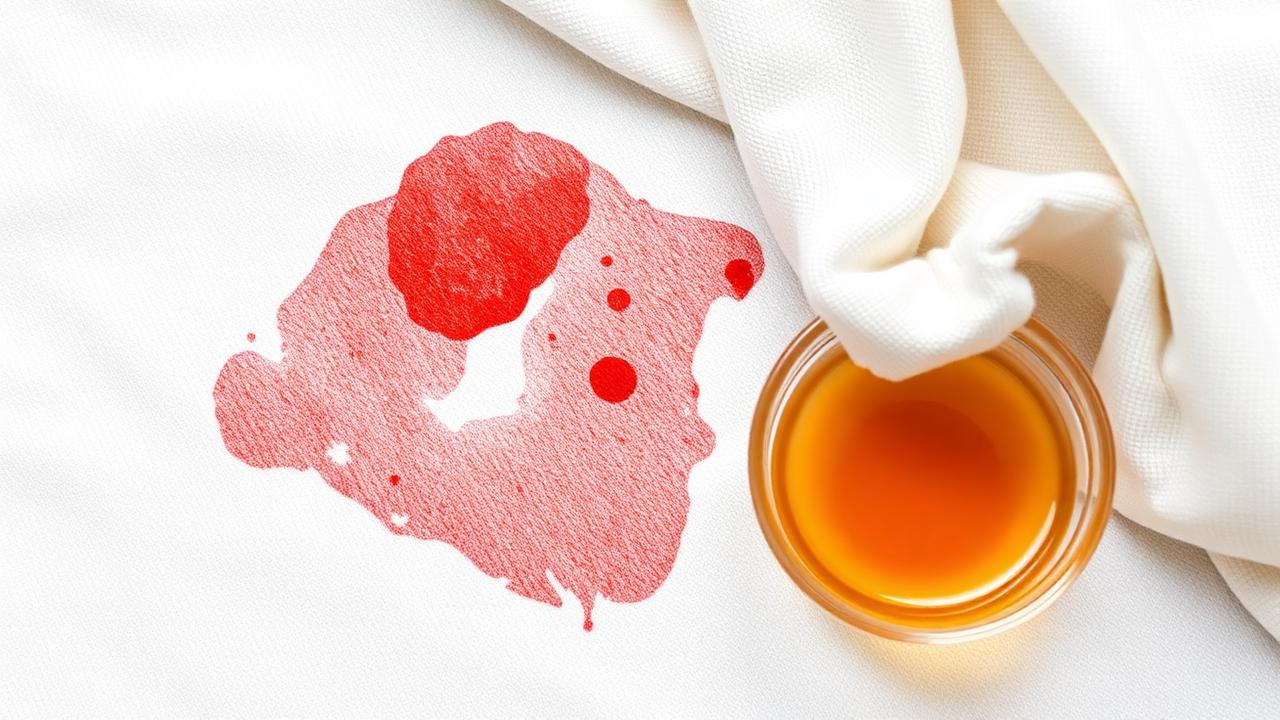
4 Low-Moisture Cleaning Methods for Mattress Toppers
Method 1: 3% Hydrogen Peroxide & Dish Soap Blot (Best for Fresh Stains)
Hydrogen peroxide chemically breaks down the iron and organic proteins in blood through oxidation. This method works well on light-colored topper covers.
- Ingredients: 2 tablespoons (30 ml) of fresh 3% hydrogen peroxide, 1 teaspoon (5 ml) of clear liquid dish soap, and 1 tablespoon (15 g) of table salt.
- Process: Mix the ingredients into a slurry. Spread a thin layer over the blood spot using a butter knife or spoon. Allow it to bubble for 10 to 12 minutes. The bubbling action lifts the dried protein to the surface. Gently scrape the crust away with a plastic scraper, then blot the surface with a barely damp microfiber cloth wrung out in ice water.
Method 2: Enzymatic Foam Treatment (Best for Deep or Set-In Stains)
Enzyme cleaners contain targeted biological enzymes (proteases) that digest blood proteins on contact without heavy moisture.
- Ingredients: Commercial enzymatic laundry or upholstery cleaner (e.g., Zout, Puracy, or Nature's Miracle).
- Process: Spray the enzymatic cleaner onto a clean microfiber cloth until damp—do not spray directly onto the topper. Press the cloth against the stain for 30 seconds to transfer the enzymes to the fabric surface. Let the enzymes work for 15 minutes. Press a dry towel over the spot with firm pressure to pull the digested blood out of the fibers.
Method 3: Unseasoned Meat Tenderizer Paste (Best for Old, Dried Blood)
Unseasoned meat tenderizer contains papain (extracted from papaya) or bromelain (from pineapple), which are natural proteases engineered to break down complex animal proteins.
- Ingredients: 1 tablespoon (15 g) unseasoned meat tenderizer and 2 teaspoons (10 ml) cold water.
- Process: Mix into a thick, moldable paste with the consistency of toothpaste. Smear the paste directly over the dried blood stain. Leave it in place for 30 to 45 minutes to digest the hardened protein matrix. Scrape the paste off with a spoon. Dab the residue with a damp cloth, then blot dry immediately.
Method 4: Baking Soda and Cold Saline Paste (Safest for Delicate Fabrics & Latex)
If your topper cover contains natural wool, silk, or bamboo fibers that are sensitive to hydrogen peroxide, use an alkaline saline paste.
- Ingredients: 2 tablespoons (30 g) baking soda, 1 tablespoon (15 g) fine table salt, and 1 to 2 tablespoons (15–30 ml) ice-cold water.
- Process: Combine into a paste. Apply generously over the stain. Let it dry completely for 1 to 2 hours. As the paste dries, the salt draws out the moisture and pigment through capillary action while the baking soda neutralizes odors. Vacuum up the dry powder using an upholstery brush attachment.
Method Comparison: Low-Moisture Blood Removers
| Method | Target Stain Age | Contact Time | Best Suited For | Risk Factor |
|---|---|---|---|---|
| 3% Hydrogen Peroxide Paste | Fresh to 24 hrs old | 10–12 minutes | White/light covers, synthetic fabrics | May slightly lighten dark fabrics |
| Enzymatic Cleaner Transfer | Any age (fresh or dried) | 15–20 minutes | Memory foam, poly-foam, pillow-tops | Lowest risk; color-safe |
| Meat Tenderizer Paste | Heavily set, dried blood | 30–45 minutes | Cotton, linen, thick knit covers | Must be unseasoned to prevent food stains |
| Baking Soda & Saline Paste | Fresh or light dried blood | 60–120 minutes | Latex, wool, bamboo, colored covers | Safe for all fabrics; gentle action |
Step-by-Step Low-Moisture Cleaning Workflow
- Strip and isolate: Unzip and remove the topper cover if it has one. If the blood bled through to the bare foam, work directly on the foam spot without removing large sections.
- Dry-blot immediately: Press dry, white paper towels firmly against the spot to absorb surface liquid. Do not wipe side to side.
- Apply the low-moisture paste: Spread your selected paste (from the methods above) in a layer roughly 1/8-inch thick over the perimeter of the stain, working inward.
- Allow contact time: Keep the room temperature moderate (65°F to 72°F / 18°C to 22°C) while the paste breaks down the stain.
- Lift the paste: Use a dull edge (plastic spatula, spoon) to lift the paste away.
- Rinse with a damp cloth: Fold a clean microfiber cloth, dip one corner in ice water, wring it out until virtually dry, and dab the area to lift chemical residue.
How to Fast-Dry the Topper After Spot Cleaning
Even minimal moisture must be eliminated promptly from memory foam and topper fabrics to stop bacterial growth:
- Towel compression: Fold a dry, thick bath towel into four layers, place it over the treated spot, and kneel or stand on it for 20 seconds. This transfers residual moisture from deep fibers into the towel.
- Baking soda cap: Dust a light layer of dry baking soda over the damp patch. It will absorb remaining dampness over 30 to 60 minutes. Vacuum thoroughly.
- Air circulation: Aim a high-velocity electric fan directly at the treated spot on high speed for 2 hours, or use a hair dryer strictly on the cool/no-heat setting held at least 8 inches away.
Frequently Asked Questions
Can I use white vinegar to remove blood from a mattress topper?
White vinegar can help with general deodorizing, but it is an acid that can set blood stains if used as the initial treatment. Use cold water with enzymatic cleaners, salt, or hydrogen peroxide first. Apply diluted vinegar (1 part vinegar to 3 parts water) only as a secondary step if a faint ring or odor remains after the protein is lifted.
Will 3% hydrogen peroxide bleach my memory foam topper?
Hydrogen peroxide has mild bleaching properties on colored organic fabrics (like dark cotton or dyed poly-blends). However, standard white or off-white memory foam and topper covers will not lose color. If your topper cover is colored, test the peroxide on an inconspicuous bottom corner before treating the stain.
What should I do if the blood has penetrated 2 inches into the foam core?
Do not pour liquid cleaner down into the hole. Instead, spray an enzymatic cleaner lightly onto the surface, insert dry microfiber towels into the compression point, and apply heavy weight to draw the liquid upward out of the foam matrix. Repeat with dry towels until no pigment transfers, then run an air mover over the topper for at least 12 hours.
Is rubbing alcohol effective against blood stains?
Rubbing alcohol (isopropyl alcohol) is not recommended for blood stains. Like heat, high concentrations of alcohol denature and coagulate proteins, fixing the blood pigments permanently into the fabric fibers.
Cleneus is reader-supported. Pages carry display advertising and some outbound product links may earn us a commission, which never changes the methods we recommend. Read our disclosure.