How to Remove Detergent Buildup Stiffness from Clothes: Step-by-Step Guide
Remove stiff detergent buildup from clothes and towels using proven vinegar rinses and laundry stripping methods. Restore fabric softness fast.
To remove detergent buildup stiffness from clothes, run the garments through a full wash cycle using 1 cup (240 ml) of 5% distilled white vinegar in place of laundry detergent, set to the hottest water temperature safe for the fabric (120°F to 140°F for cottons). For severe, long-term residue on towels or athletic wear, perform a deep laundry strip by soaking items for 4 to 5 hours in a bathtub filled with hot water, 1/4 cup borax, 1/4 cup washing soda, and 1/4 cup powdered detergent, followed by a detergent-free rinse cycle in your washing machine.
Why Detergent Buildup Causes Stiff, Scratchy Fabrics
Modern high-efficiency (HE) washing machines use as little as 13 to 17 gallons of water per cycle compared to 40 gallons in traditional machines. When you use more than 2 tablespoons (30 ml) of liquid detergent per load, the machine cannot thoroughly rinse away the excess surfactants. Over time, these unrinsed surfactants bind with hard water minerals (calcium and magnesium) and body oils, creating a microscopic, waxy coating on fabric fibers.
This accumulation causes several distinct problems:
- Cardboard-like texture: Cotton loops on towels and t-shirts mat down and lose flexibility.
- Decreased absorbency: Hydrophobic surfactant residues repel moisture instead of absorbing it.
- Trapped odors: Bacteria and fungal spores get sealed beneath the detergent film, creating sour smells when reworn or rewetted.
- Skin irritation: Trapped fragrance oils, optical brighteners, and preservatives rub directly against sensitive skin.
Method 1: The Distilled White Vinegar Reset (Best for Everyday Loads)
Distilled white vinegar contains acetic acid (typically 5% concentration), which dissolves alkaline mineral residues and breaks down surfactant deposits without degrading fabric elasticity.
Required Supplies
- 1 to 2 cups (240 to 480 ml) 5% distilled white vinegar
- Water temperature: Warm (90°F to 110°F) or Hot (120°F to 140°F)
- No commercial detergents or fabric softeners
Step-by-Step Instructions
- Step 1: Load the machine loosely. Fill the wash drum only half to two-thirds full so water circulates freely through the fabric weave.
- Step 2: Add the vinegar. Pour 1 cup of distilled white vinegar directly into the liquid fabric softener dispenser, or add it straight into the drum during the primary wash cycle. For heavily crusted towels, increase to 2 cups.
- Step 3: Run a heavy-duty cycle. Select a heavy or normal cycle with hot water (for whites and colorfast cottons) or warm water (for synthetics and darks).
- Step 4: Execute an extra rinse. Run a second rinse cycle with plain water to flush away loosened minerals and acetic acid.
- Step 5: Dry thoroughly. Tumble dry on medium heat (135°F to 150°F) with wool dryer balls to manually fluff fibers without adding synthetic coatings.
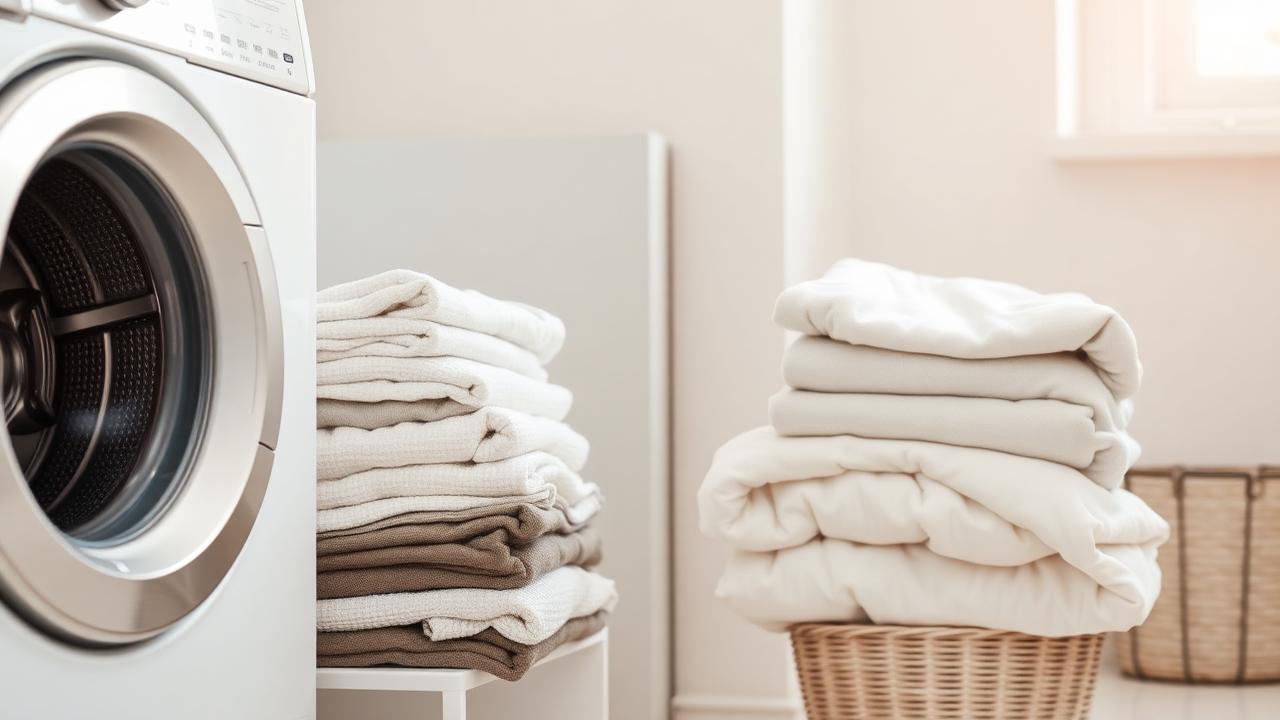
Method 2: Deep Laundry Stripping (Best for Severe Buildup & Towels)
Laundry stripping is an intensive, accelerated clarifying soak that extracts embedded detergent, hard water scale, and fabric softener wax. Reserve this method for sturdy, colorfast fabrics such as cotton towels, bed sheets, and plain workout clothing. Avoid stripping wool, silk, spandex blends, or delicate synthetics.
Required Supplies
- Bathtub, large utility sink, or a top-loading washer with a manual soak setting
- 1/4 cup (60 g) Borax (sodium tetraborate)
- 1/4 cup (60 g) Washing soda (sodium carbonate)
- 1/4 cup (60 ml or 60 g) Powdered or liquid clarifying laundry detergent
- Hot water (130°F to 140°F)
Step-by-Step Instructions
- Step 1: Fill the vessel with hot water. Fill your tub or basin with clean, hot tap water until it is deep enough to submerge your items completely.
- Step 2: Dissolve the chemicals. Add 1/4 cup borax, 1/4 cup washing soda, and 1/4 cup detergent. Stir with a clean wooden spoon or broom handle until the powders fully dissolve.
- Step 3: Submerge clean laundry. Place clean, dry garments or towels into the bath. Press them down so they are fully saturated.
- Step 4: Soak for 4 to 5 hours. Stir the garments vigorously every 45 to 60 minutes. You will observe the water turn murky gray or brown as the trapped residues release.
- Step 5: Wring and transfer. Squeeze out excess liquid from the garments and transfer them directly into your washing machine.
- Step 6: Run a rinse and spin cycle. Run a complete cycle with warm water and no added detergent, then machine dry.
Method 3: The Baking Soda and Vinegar Two-Step Wash
If your garments suffer from both stiffness and persistent sour odors, sodium bicarbonate (baking soda) paired sequentially with acetic acid provides a mechanical and chemical reset.
Step-by-Step Instructions
- Step 1: First wash with baking soda. Add 1/2 cup (115 g) of baking soda directly into the empty drum. Load your clothes and run a hot cycle without detergent. Baking soda raises the water pH, neutralizing sour fatty acids and loosening stubborn surface deposits.
- Step 2: Second wash with vinegar. Immediately after the first cycle finishes, pour 1 cup (240 ml) of distilled white vinegar into the detergent dispenser. Run a second full cycle with warm water. The acidic rinse neutralizes the baking soda and clears the dislodged residue.
- Step 3: Dry as usual. Tumble dry on medium heat or hang outside in direct sunlight.
Comparing Methods to Fix Detergent Buildup
| Method | Best For | Key Ingredients | Water Temp | Total Time |
|---|---|---|---|---|
| Vinegar Reset | Mild stiffness, regular t-shirts, sheets | 1–2 cups 5% white vinegar | Warm to Hot (105°F–130°F) | 45–60 minutes |
| Laundry Stripping | Heavy buildup on cotton towels, bed linens | Borax, washing soda, detergent | Very Hot (130°F–140°F) | 4–5 hours |
| Baking Soda & Vinegar Dual Wash | Stiff clothes with sour/musty odors | 1/2 cup baking soda + 1 cup vinegar | Hot wash, then Warm wash | 90–120 minutes |
How to Prevent Detergent Buildup Moving Forward
Preventing buildup eliminates the need for frequent stripping and extends garment lifespan. Implement these laundry practices:
- Measure precisely: Use no more than 2 tablespoons (30 ml / 1 oz) of 2x concentrated liquid detergent for a standard 8 lb load. For light loads or soft water, reduce to 1 tablespoon (15 ml).
- Ditch liquid fabric softeners: Liquid softeners use silicone and quaternary ammonium compounds to coat fibers in an oily layer. Replace them permanently with 1/2 cup of white vinegar in the rinse compartment and 3 to 4 wool dryer balls in the dryer.
- Adjust for water hardness: If your home has hard water (above 7 grains per gallon or 120 ppm), add 1 tablespoon of washing soda or borax to every wash load to soften water and keep detergents from precipitating onto fabrics.
- Clean your washer monthly: Run a self-clean cycle using a dedicated washing machine cleaner tablet or 2 cups of white vinegar on the hottest sanitize cycle to remove scum lines from the drum and drain pump.
Frequently Asked Questions
Can I use apple cider vinegar instead of white vinegar?
No. Apple cider vinegar contains tannins, sugars, and coloring agents that can stain light-colored fabrics and leave residues. Always use clear, distilled white vinegar with 5% acidity.
Will vinegar damage the rubber seals in my front-load washer?
Occasional use of 1 to 2 cups of diluted 5% white vinegar in a full load of water will not degrade rubber gaskets or hoses. Avoid using undiluted industrial cleaning vinegar (20% to 30% concentration) or soaking rubber components directly in vinegar for extended periods.
Why are my clothes still stiff after line-drying?
Line-drying naturally produces stiffer fabric than machine-drying because air-dried cotton fibers dry flat in static positions without agitation. To soften line-dried clothes, shake each item vigorously before hanging, or toss them into the tumble dryer on a no-heat 'Air Fluff' cycle for 5 to 10 minutes with wool dryer balls after drying.
Can I strip colored clothes without fading them?
Yes, provided you test for colorfastness first. Submerge a small, hidden corner of the colored garment in hot water mixed with borax and washing soda for 15 minutes. If no dye bleeds into the water, the garment is safe to strip. Always avoid stripping dark or neon garments alongside light colors.
Cleneus is reader-supported. Pages carry display advertising and some outbound product links may earn us a commission, which never changes the methods we recommend. Read our disclosure.