
How to Remove Dried Turmeric Stains from Laminate Countertop
Remove stubborn, dried turmeric stains from laminate countertops fast using baking soda, rubbing alcohol, and oxalic acid without ruining your finish.
To remove dried turmeric stains from a laminate countertop, make a thick paste using 2 tablespoons of baking soda and 1 tablespoon of 3% hydrogen peroxide (or warm water). Apply the paste directly over the yellow stain, let it sit undisturbed for 15 to 20 minutes, and gently wipe it away using a damp microfiber cloth. For stubborn, deep-set yellowing, wipe the area with 70% isopropyl alcohol or apply an oxalic acid cleanser like Bar Keepers Friend for 2 minutes to lift the remaining curcumin pigment without stripping the laminate wear layer.
Why Turmeric Stains Laminate So Aggressively
Turmeric contains curcumin, a vivid yellow-orange polyphenol that is hydrophobic (water-insoluble) and oil-soluble. When turmeric or curry sauce spills onto a laminate countertop and dries, the curcumin binds to the outer melamine resin layer. Standard dish soap and warm water fail to lift dried turmeric because water cannot break curcumin's chemical bond with synthetic resins. Lifting the stain requires mildly alkaline lifting agents, solvents that dissolve hydrophobic compounds, or light oxidation that breaks down the pigment molecule.
Top 4 Methods to Remove Dried Turmeric from Laminate
Method 1: Baking Soda and 3% Hydrogen Peroxide Paste
This is the safest and most effective frontline treatment for laminate surfaces. Baking soda provides gentle, non-abrasive mechanical lifting, while hydrogen peroxide acts as a mild, laminate-safe oxidizing agent that breaks down curcumin pigments.
- Supplies needed: 2 tablespoons baking soda, 1 tablespoon fresh 3% hydrogen peroxide, small bowl, soft microfiber cloth.
- Preparation: Mix the baking soda and hydrogen peroxide in a bowl until it forms a creamy consistency similar to toothpaste.
- Application: Spread the paste across the dried stain in a 1/8-inch thick layer, covering the edges completely.
- Dwell time: Allow the mixture to rest for 15 to 30 minutes. Do not let it dry completely into a hard crust.
- Removal: Wipe away the paste with a warm, damp microfiber cloth using circular motions. Rinse the cloth and wipe again with clean water.
Method 2: Isopropyl Alcohol (70% or 91%)
Curcumin dissolves rapidly in alcohol. Isopropyl alcohol penetrates microscopic surface textures in laminate countertops without softening the plastic resin or dissolving the underlying contact adhesive.
- Supplies needed: 70% or 91% isopropyl rubbing alcohol, cotton rounds or a clean white rag.
- Application: Pour 1 to 2 teaspoons of isopropyl alcohol directly onto a cotton round or folded rag.
- Technique: Press the soaked pad firmly onto the dried turmeric stain and hold it in place for 60 seconds to soften the dried oils.
- Rubbing: Rub the stain in tight circular motions, turning the pad frequently so the lifted yellow pigment is transferred onto clean sections of the cloth.
- Finishing: Clean the area with mild dish soap and warm water to remove any residual oil.
Method 3: Bar Keepers Friend (Oxalic Acid)
If hydrogen peroxide and alcohol leave a faint yellow halo, oxalic acid is the most reliable stain lifter. Oxalic acid breaks the chemical bonds of organic pigments while remaining safe for high-pressure laminate when used with short contact times.
- Supplies needed: Bar Keepers Friend Cleanser (liquid soft cleanser or powder), damp non-scratch sponge.
- Application: Squeeze a nickel-sized amount of liquid cleanser (or sprinkle a teaspoon of powder mixed with water into a wet slurry) onto the stain.
- Dwell time: Let it sit for no longer than 2 minutes. Laminate can dull if acidic cleansers are left on the surface for extended periods.
- Agitation: Buff gently with a non-scratch sponge or damp cloth. Never use abrasive scrubbing pads, steel wool, or scouring sponges.
- Rinse: Rinse thoroughly with cool water and dry immediately with a clean towel.
Method 4: Distilled White Vinegar and Lemon Juice Compress
For mild discoloration or households seeking an all-natural acid approach, a mixture of acetic acid (vinegar) and citric acid (lemon juice) helps fade surface-level yellowing.
- Supplies needed: 2 tablespoons distilled white vinegar, 1 tablespoon fresh lemon juice, paper towel.
- Application: Saturate a folded paper towel with the liquid mixture and place it flat over the turmeric spot.
- Dwell time: Leave the compress on the stain for 20 to 30 minutes.
- Removal: Remove the compress, wipe the area with a damp microfiber cloth, and dry thoroughly.
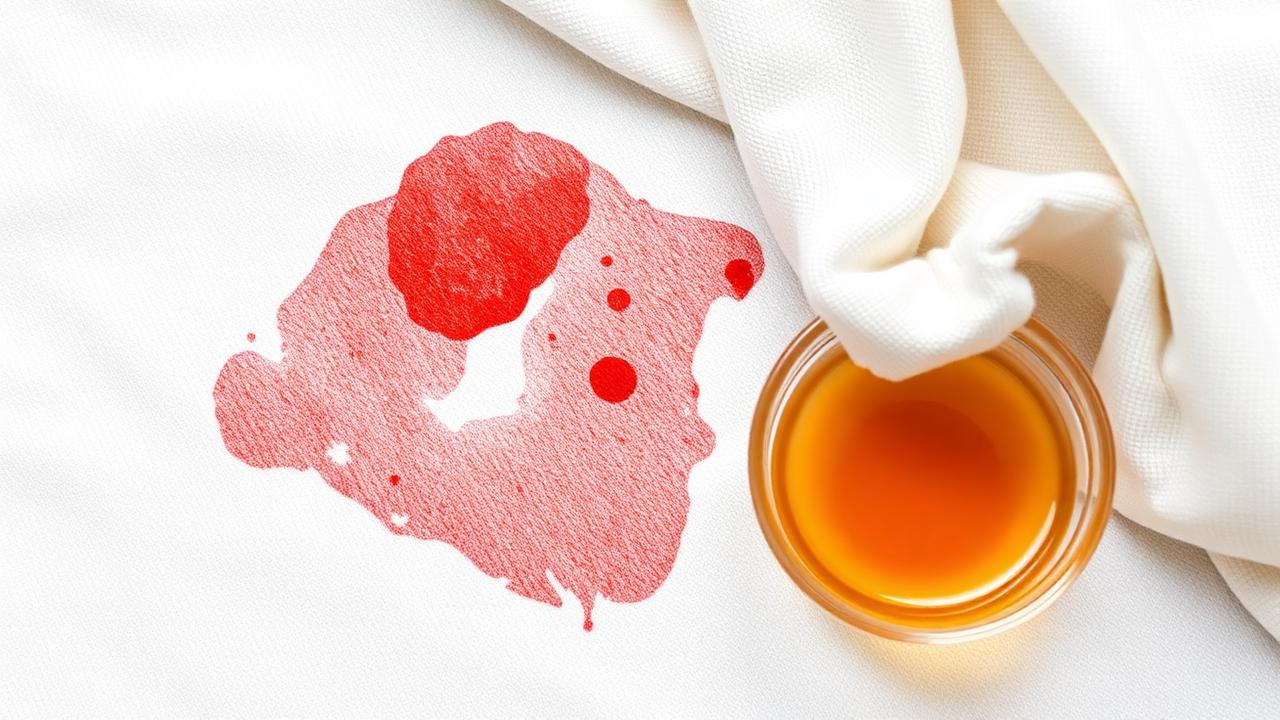
Turmeric Removal Method Comparison
| Method | Active Agent | Dwell Time | Best For | Laminate Safety Rating |
|---|---|---|---|---|
| Baking Soda + Peroxide | Alkaline + 3% Peroxide | 15–30 mins | Standard dried stains & textured laminate | Very Safe (No risk of dulling) |
| Isopropyl Alcohol | Solvent (70–91%) | 1–3 mins | Freshly dried curry oils & spots | Extremely Safe (Fast evaporating) |
| Bar Keepers Friend | Oxalic Acid | 1–2 mins | Deep, set-in yellow halos | Safe (Must rinse within 2 minutes) |
| Vinegar + Lemon | Acetic & Citric Acid | 20–30 mins | Faint residual yellow haze | Safe (Avoid seams and edges) |
Step-by-Step Protocol for Stubborn, Set-In Stains
If the turmeric has been sitting on your laminate countertop for days or weeks, use this layered protocol to completely lift the pigment without damaging the gloss or matte finish.
- Step 1: Degrease the surface. Wash the stain with warm water (approx. 45°C / 115°F) and a grease-cutting dish soap like Dawn. This removes the surface cooking oils encapsulating the turmeric.
- Step 2: Apply the alcohol soak. Lay an alcohol-soaked cotton pad over the spot for 3 minutes to dissolve the top layer of curcumin. Wipe clean.
- Step 3: Apply the peroxide paste. Mix 2 parts baking soda to 1 part 3% hydrogen peroxide. Spread it across the remaining stain, cover it with plastic cling wrap to prevent it from drying out, and let it sit for 45 minutes.
- Step 4: Gentle buffing. Remove the plastic wrap and use the damp paste to gently buff the area with a microfiber cloth in circular strokes.
- Step 5: Neutralize and rinse. Wipe away all paste residues with warm water, spray lightly with a 50/50 water and white vinegar solution to neutralize alkaline residue, and dry with a microfiber towel.
What NOT to Do on Laminate Countertops
- Do not use chlorine bleach undiluted: Concentrated bleach can permanently discolor or cloud the decorative paper layer underneath the transparent melamine wear layer.
- Never use abrasive pads or steel wool: Green heavy-duty Scotch-Brite pads, pumice stones, and steel wool scratch the protective resin, creating microscopic grooves that will trap future stains permanently.
- Avoid excessive liquid near seams: If your laminate countertop has visible edge seams or joins near the sink, keep standing liquids away. Moisture penetrating the core board causes swelling and permanent bubbling.
- Avoid heat application: Do not try to steam clean or use boiling water directly on laminate, as high temperatures can delaminate the adhesive holding the surface sheet to the substrate.
Frequently Asked Questions
Does sunlight fade turmeric stains on laminate?
Yes. Curcumin is highly photodegradable and breaks down rapidly when exposed to ultraviolet (UV) light. If your laminate countertop receives direct sunlight from a nearby window, faint residual yellow stains will often fade completely on their own within 2 to 4 days.
Can I use Magic Eraser (melamine foam) on turmeric stains?
Use it with extreme caution. Melamine foam acts as an ultra-fine abrasive (equivalent to very high-grit sandpaper). While it will remove turmeric, rubbing too vigorously will strip the factory sheen off gloss or satin laminate, leaving a permanent dull spot.
Will baking soda scratch my laminate finish?
No. Baking soda has a Mohs hardness rating of approximately 2.5, whereas laminate resin has a hardness rating between 3 and 4. Baking soda is softer than the laminate surface, making it safe for scrubbing when mixed with liquid into a wet paste.
How can I prevent turmeric from staining laminate in the future?
Apply a specialized laminate countertop polish or a non-toxic carnauba-based countertop wax every 3 to 6 months. This creates a sacrificial barrier over the melamine layer, giving you extra time to wipe up curry and spice spills before they penetrate the surface.
Cleneus is reader-supported. Pages carry display advertising and some outbound product links may earn us a commission, which never changes the methods we recommend. Read our disclosure.