
How to Remove Hard Water Stains from Bathroom Surfaces
Learn how to remove hard water stains from glass shower doors, faucets, toilets, and tiles using safe, powerful household and professional methods.
To remove hard water stains quickly and effectively, use a mild acid such as distilled white vinegar or lemon juice to dissolve the alkaline mineral deposits. Apply the acidic solution directly to the affected surface, allow it to sit for 15 to 30 minutes to break down the calcium and magnesium, and scrub gently with a non-scratch sponge or microfiber cloth before rinsing thoroughly with clean water.
What Causes Hard Water Stains in Your Bathroom?
Hard water stains, often referred to as limescale or mineral buildup, occur when water with high concentrations of dissolved minerals evaporates and leaves behind solid deposits. The primary culprits are calcium and magnesium carbonates, which bind tightly to smooth bathroom surfaces.
Over time, these clear deposits react with soap scum, body oils, and chemical residues from shampoos, creating a cloudy, chalky haze on glass, dull gray spots on chrome fixtures, and reddish-brown rings inside toilet bowls. Because these deposits are alkaline, standard neutral cleaners cannot dissolve them; you need acidic agents or targeted mechanical action to break the chemical bonds.
Essential Supplies for Removing Hard Water Buildup
Before you begin cleaning, assemble the right tools and cleaning agents. Most hard water deposits yield to simple household ingredients, though severe buildup may require specialized tools.
- Distilled white vinegar (standard 5% acidity or cleaning vinegar at 6%)
- Baking soda (sodium bicarbonate) for gentle abrasive cleaning
- Fresh lemons or bottled lemon juice
- Spray bottle for even solution distribution
- Microfiber cloths and non-scratch scrubbing sponges
- Old soft-bristled toothbrush or detail brush for tight crevices
- Pumice stone (specifically formulated for porcelain fixtures)
- Rubber cleaning gloves to protect your hands from prolonged acid contact
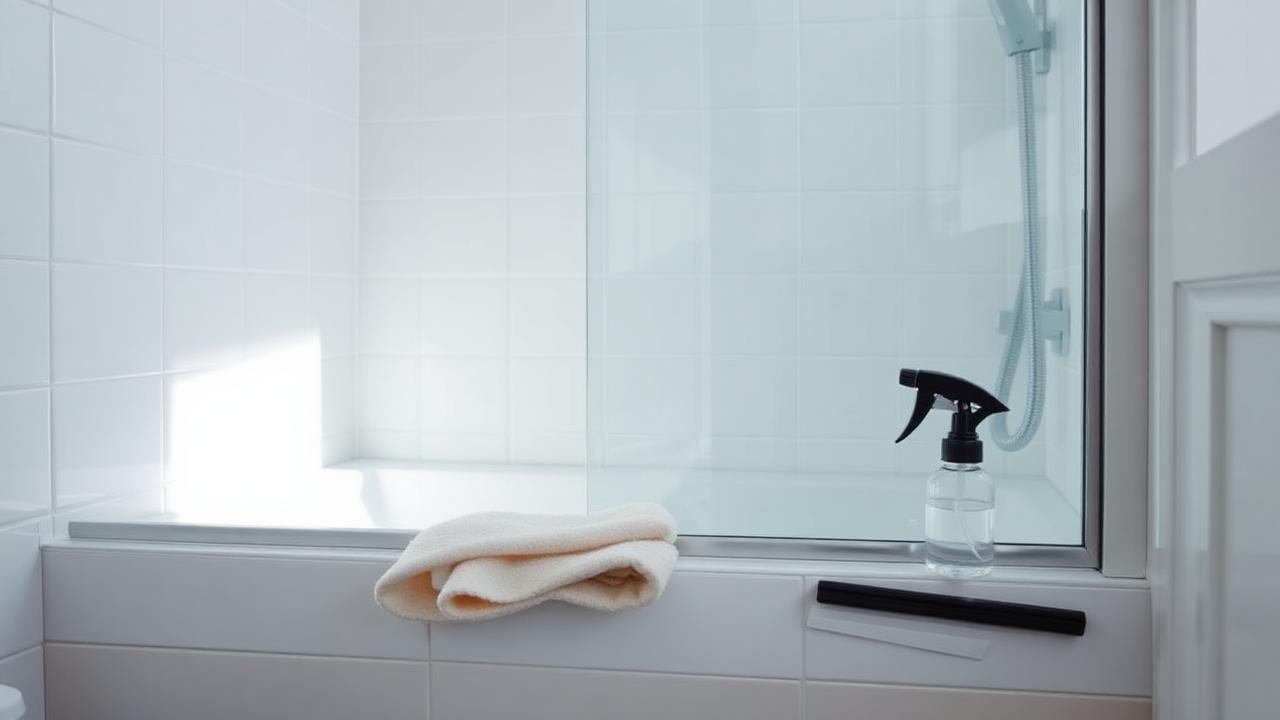
How to Remove Hard Water Stains from Glass Shower Doors
Shower doors are often the most noticeable victims of mineral deposits. When water splashes onto the glass and dries, it leaves behind an opaque, streaky film that gets progressively harder to eliminate.
Start by mixing equal parts distilled white vinegar and warm water in a spray bottle. For heavy buildup, you can use undiluted heated vinegar. Spray the entire glass surface generously and let the solution sit for 20 to 30 minutes. The acid needs time to dissolve the calcium crystals.
If stubborn spots remain, create a paste using equal parts baking soda and water. Apply this paste directly over the vinegar-sprayed glass using a soft sponge. The mild bubbling reaction helps lift the loosened minerals. Scrub in gentle, circular motions, paying extra attention to the lower half of the door where water pools. Rinse the door thoroughly with warm water, and immediately dry the surface with a squeegee and a clean microfiber towel to prevent new spots from forming.
Cleaning Mineral Buildup on Faucets and Showerheads
Faucets, aerators, and showerheads frequently develop crusty white rings around nozzles and handles. These deposits not only look unsightly but can also restrict water flow.
For removable showerheads, unscrew the unit and submerge it in a bowl of warm white vinegar for 2 to 4 hours. Once soaked, use an old toothbrush to scrub away the loosened chalky buildup from each nozzle, then flush the showerhead with hot water before reinstalling it.
For fixed showerheads and sink faucets, fill a plastic sandwich bag halfway with white vinegar. Place the bag over the fixture so the aerator is completely submerged, and secure it tightly with a heavy-duty rubber band. Allow the fixture to soak for at least an hour. Remove the bag, wipe away the softened minerals with a damp cloth, and polish the metal dry. Note: Avoid leaving vinegar on delicate finishes like oil-rubbed bronze, brass, or matte black for extended periods, as prolonged acid exposure can damage specialized coatings.
Tackling Stubborn Mineral Rings in the Toilet Bowl
Toilet bowls frequently accumulate stubborn brown, yellow, or white mineral rings near the standing water line and under the rim jets.
Begin by shutting off the water supply valve behind the toilet and flushing once to lower the water level inside the bowl. This ensures your cleaning solution makes direct contact with the mineral ring rather than becoming diluted. Pour two to three cups of undiluted white vinegar directly into the bowl, coating the sides, and let it rest undisturbed for at least two hours or overnight.
For extreme, calcified buildup that resists chemical dissolution, use a natural pumice stone. Ensure both the pumice stone and the porcelain bowl are completely wet throughout the entire process; using a dry pumice stone will scratch the porcelain glaze. Gently rub the wet stone directly over the mineral ring using light, even pressure until the ring disappears. Turn the water supply back on and flush thoroughly.
Removing Hard Water Deposits from Tiles and Grout
Ceramic and porcelain tiles hold up well against hard water treatments, but care must be taken with surrounding grout and sensitive stone materials.
To clean standard ceramic or porcelain tile, spray the surface with a 50/50 mix of vinegar and water, let it sit for 15 minutes, and scrub the tile faces with a non-scratch scrub sponge. For tile grout, mix baking soda with hydrogen peroxide into a thick paste, apply it along the grout channels with an old toothbrush, let it sit for 10 minutes, and scrub clean.
Warning: Never use vinegar, lemon juice, or any acidic cleaner on natural stone surfaces, including marble, travertine, granite, or slate. Acid causes immediate chemical etching, dulling the finish and permanently damaging the stone. On natural stone, use only pH-neutral stone cleaners alongside a nylon-bristle brush.
How to Prevent Hard Water Stains from Returning
Preventing hard water stains requires far less effort than removing calcified mineral layers. Integrating simple preventive habits into your daily routine will keep your bathroom sparkling.
- Keep a squeegee inside the shower and wipe down glass walls and tiles after every use.
- Wipe chrome faucets and handles dry with a hand towel after your morning and evening routines.
- Apply a hydrophobic glass treatment (such as a shower glass shield or car windshield rain repellent) to your shower doors every few months to encourage water to bead up and slide off.
- Ensure proper bathroom ventilation by running the exhaust fan during and for 20 minutes after showers to reduce humidity and drying time.
- Consider installing a whole-home water softener or a dedicated showerhead filter to reduce mineral content at the source.
Keep Your Bathroom Sparkling
Hard water stains are an inevitable challenge in many homes, but they do not have to permanently ruin your bathroom fixtures. By leveraging simple acidic solutions like white vinegar, applying gentle abrasives like baking soda, and maintaining a quick daily wipe-down routine, you can easily eliminate stubborn limescale and keep your bathroom looking fresh and clean.
Cleneus is reader-supported. Pages carry display advertising and some outbound product links may earn us a commission, which never changes the methods we recommend. Read our disclosure.