
Why Is My Vacuum Hard to Push on High Pile Carpet? (Causes & Fixes)
Struggling to push your vacuum on plush or high pile carpet? Learn the top causes, quick mechanical fixes, and the best settings to stop vacuum sticking.
Your vacuum is hard to push on high pile carpet primarily because strong suction creates an airtight seal against dense, long carpet fibers, pulling the cleaner head flat against the floor. When combined with a low nozzle height setting, small transport wheels, or a high-torque brush roll that gets bogged down in fibers deeper than 0.5 inches, the machine becomes nearly impossible to maneuver. Adjusting height settings, opening suction vents, and cleaning the brush roll solve this problem instantly.
The Core Reasons Your Vacuum Sticks to High Pile Carpet
Modern carpets—especially high pile, plush, and ultra-dense microfibers (often marketed as 'soft carpet')—pack thousands more yarn strands per square inch than traditional carpeting. When a standard vacuum cleaner encounters these surfaces, several mechanical conflicts happen at once:
- Airflow Starvation and Suction Lock: Vacuums rely on moving air (measured in cubic feet per minute, or CFM) to lift debris. On dense, high-pile carpets, the deep yarn strands pack tightly around the vacuum baseplate, eliminating air intake. Without airflow relief vents, the motor generates pure static suction, acting like a giant suction cup anchored to the carpet backing.
- Incorrect Nozzle Height Setting: If your vacuum head sits at a low or hardwood setting, the baseplate sinks into the deep carpet pile rather than skimming over the top. This causes the front edge of the vacuum to act like a bulldozer, pushing against fibers rather than gliding across them.
- Brush Roll Friction and Motor Strain: When rotating brush roll bristles bury too deeply into yarn strands longer than 0.5 inches, the friction forces the brush motor to work harder. On models with electronic safety cut-offs, the brush roller may shut off entirely to prevent the drive belt from snapping.
- Undersized Transport Wheels: Vacuums equipped with small (under 1.5-inch diameter) plastic wheels sink directly down to the carpet backing. Larger rear wheels (2.5 inches or greater) disperse the vacuum's weight across the top of the pile.
5 Fixes to Make Your Vacuum Glide on Deep Carpet
1. Adjust the Nozzle to the Highest Setting
If your vacuum features a manual height knob (typically numbered 1 through 5, or labeled Low to Extra High), turn it to the highest setting before placing the vacuum on the carpet. Lower it one click at a time only until you hear the brush bristles lightly agitating the carpet surface. If you feel sudden resistance or the machine becomes hard to push, raise it back up one notch.
2. Open the Suction Bleed Valve
Many upright and canister vacuums feature a manual suction release slide on the handle or hose wand. Opening this valve vents a controlled volume of air into the airflow path. While this slightly reduces the vacuum's static pressure seal, it dramatically increases airflow (CFM), prevents suction lock, and allows the head to move smoothly while still lifting surface dirt.
3. Detangle and Service the Brush Roll
Hair, carpet fibers, and thread wrapped around the roller bearings increase mechanical drag. Remove the bottom soleplate every 30 to 60 days, extract the brush roller, and use a seam ripper or utility blade to slice through wound fibers along the brush guide groove. Clean the end caps and inspect the drive belt for signs of stretching or glazed rubber caused by heat friction.
4. Turn Off the Brush Roller (For Shag and Frieze)
For deep shag or frieze carpets with yarn lengths exceeding 0.75 inches, active spinning brush rolls tend to pull the vacuum forward violently or tangle in the strands. Switch your machine to 'suction only' or 'bare floor' mode if your vacuum has a brush roll shut-off switch. This lets pure suction lift debris without the mechanical resistance of high-speed bristles.
5. Vacuum in Forward-Only or Slow Overlapping Strokes
Pushing a vacuum into deep carpet against the natural grain of the pile requires twice the physical effort. Pull the vacuum backward along the grain to lift the fibers, then glide forward at a slower pace. Avoid rapid, jerky back-and-forth scrubbing motions that compress pile fibers beneath the housing.
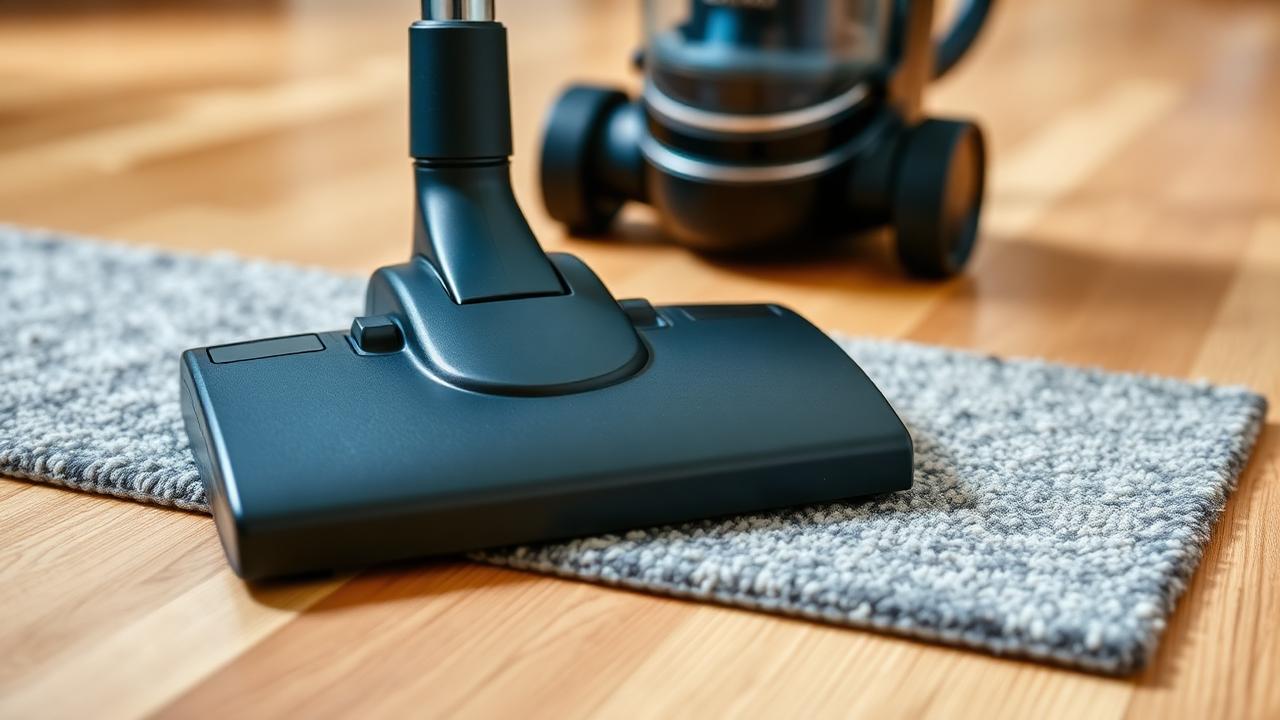
Carpet Pile Types and Recommended Vacuum Settings
Use this reference table to match your carpet pile depth with the correct vacuum configuration:
| Carpet Style | Pile Depth | Nozzle Height Setting | Suction Level | Brush Roll Mode |
|---|---|---|---|---|
| Commercial / Flat Loop | Under 0.25 inches | Low (Setting 1-2) | 100% (Valve Closed) | ON |
| Medium Cut Pile | 0.25 to 0.5 inches | Medium (Setting 3) | 100% (Valve Closed) | ON |
| Plush / High Pile | 0.5 to 0.75 inches | High (Setting 4-5) | 70-80% (Valve Half-Open) | ON (Light Agitation) |
| Ultra-Dense Soft Carpet | 0.5 to 0.8 inches | Highest Setting | 50-70% (Valve Fully Open) | ON (Soft Bristles) |
| Shag / Cable / Frieze | Over 0.75 inches | Highest Setting | 60-80% (Valve Vented) | OFF (Suction Only) |
The Hidden Dangers of Forcing a Stuck Vacuum
Muscling a stuck vacuum cleaner across resistant carpet does more than strain your back—it causes rapid, expensive mechanical and textile damage:
- Drive Belt Melting: When the brush roller gets trapped in deep pile but the drive motor keeps spinning, the rubber drive belt slips across the motor spindle. The resulting friction can reach temperatures above 200°F within 15 seconds, snapping or melting the belt.
- Motor Overheating: When airflow drops to near zero due to an airtight suction seal, the vacuum motor loses its primary cooling mechanism. Vacuum motors rely on intake air to draw heat away from the motor windings. Prolonged airflow starvation can trip thermal safety fuses or burn out the motor permanently.
- Carpet Fuzzing and Fiber Burn: If a stuck vacuum sits in one spot for even 3 to 5 seconds with a spinning brush roll, high-friction nylon bristles can abrade delicate synthetic fibers, creating permanent frizzed patches or friction burns known as 'pile blossom.'
Features to Look For If You Have High-Pile Carpet
If your current machine lacks the mechanical adjustments needed for deep carpet, look for these specific engineering features when purchasing a replacement:
- Manual Height Adjustment: Avoid 'auto-adjusting' floorheads that rely on weak internal springs; they frequently fail to raise high enough on dense plush carpet. Opt for floorheads with 4 to 6 distinct mechanical height positions.
- Handle-Mounted Variable Suction Control: Electronic motor speed controls or calibrated mechanical bypass vents let you fine-tune suction down to the exact level needed to prevent floorhead lock.
- Large-Diameter Rubberized Wheels: Rear wheels measuring 2.5 to 3.5 inches in diameter keep the heavy motor base elevated above the pile plane.
- Vented Baseplates: Purpose-built soft-carpet floorheads (such as Miele SoftCarpet tools or specialized Sebo heads) feature intake channels along the front and sides of the bumper to maintain airflow even when pressed firmly into deep yarn.
Frequently Asked Questions
Can high pile carpet ruin my vacuum?
Yes. Forcing a vacuum that has sealed against dense carpet starves the motor of cooling airflow, leading to overheating, broken drive belts, and stripped brush roll gears. Always vent the suction and raise the height setting to protect the machine.
Why does my vacuum work fine on hardwood but stop on carpet?
Hard surfaces allow continuous airflow underneath the nozzle edges, maintaining high air movement without a vacuum seal. Deep carpet encapsulates the baseplate, cutting off airflow and causing sudden suction lock that stops the roller and makes the unit hard to push.
Why does my vacuum bog down on 'Soft Carpet' specifically?
'Soft carpet' fibers (like Caress, SmartStrand Silk, or SoftSpring) are engineered with ultra-fine synthetic filaments packed at up to triple the density of traditional carpets. This dense micro-weave behaves like a solid fabric barrier, creating an immediate airtight seal against standard vacuum baseplates.
Should I use a robot vacuum on high pile carpet?
Most robot vacuums struggle on carpet pile over 0.6 inches. Their small drive wheels (typically under 2 inches) and low ground clearance cause them to high-center or trigger drive-wheel stall errors. Use robot vacuums for low-to-medium pile and rely on a manually adjustable upright or canister for deep plush carpets.
Cleneus is reader-supported. Pages carry display advertising and some outbound product links may earn us a commission, which never changes the methods we recommend. Read our disclosure.